Train your body to be ready for the stage
Build your muscles to build your voice
The "body" people say is missing from a voice, in terms of timbre, is in fact muscle that was never built to support the voice itself.
PHYSICAL TRAINING IN THE SERVICE OF VOCAL DEVELOPMENT
What science states today, she was teaching already
When a teacher tells a singer that their voice lacks "body", they are talking about timbre. They are describing a sensation. What they are pointing at without naming it is muscle that was never built to support the voice. Not a missing gift: tissue to be built.
Adeline Toniutti is an early voice in vocal technique: she advocated, before anyone else, what science now confirms.
More than ten years ago she was already teaching that strength work and cardio are not side activities for a singer, but part of the vocal work itself. In France at the time, this was treated as an eccentricity. Since then, ENT surgeons, voice surgeons and research have proved her right, and the United States has made it a public subject.
The whole CALYP position follows from this: vocal coaching has to refocus and connect itself to physical training. One does not go without the other.
The "body" people say is missing from a voice, in terms of timbre, is in fact muscle that was never built to support the voice itself.
JOHNNY, 2012
He said it on the record, and teaching kept saying the opposite
Spring 2012. Johnny Hallyday is preparing the tour that opens on 14 May at the Montpellier Arena. Asked how he trains, he answers like a voice technician.
WHAT HE SAID IN 2012
"I train every day. A lot of cycling, a lot of cardio for the breath, and weights."
"The abdominals matter enormously for the voice. You have to sing from the diaphragm and the gut, not from the throat."
"When kids ask me for advice, the first thing I say is: sing with your belly. If you start singing loud from the throat, after four songs you have lost your voice."
Johnny Hallyday · preparing his 2012 tour
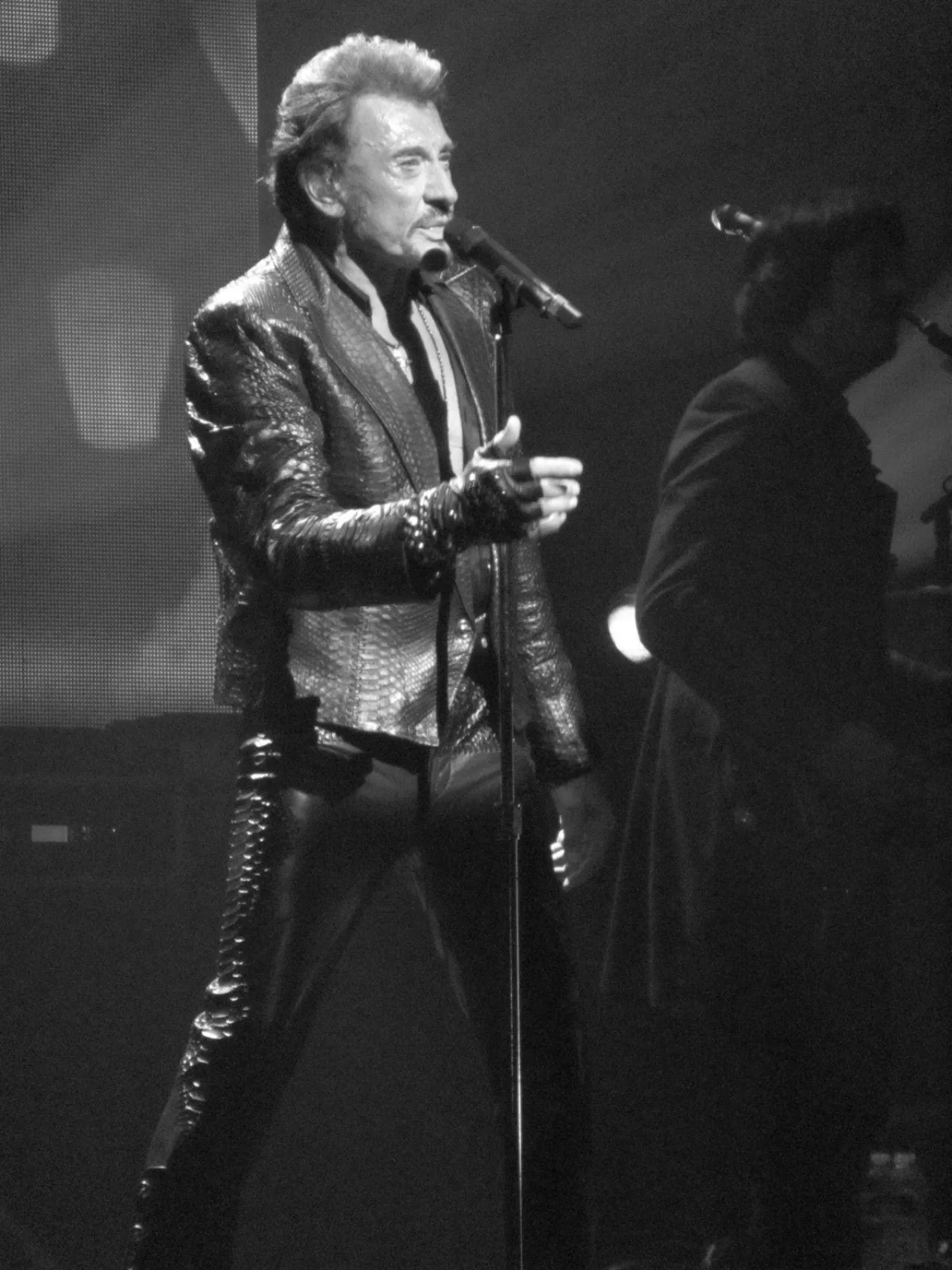
This was not a passing tour fad. So the work would not stop on the road, he had a semi-trailer of weight training equipment follow the tour.
A French icon therefore explained, on the record, that abdominal muscle is what keeps a voice alive after the fourth song. Fourteen years later, a large part of singing teaching in France still opens the lesson with "relax your belly".
THE DISTANCE
A stadium is a running track with lights on it
We speak of "the stage" as a place. It is first of all a distance. The Olympia in Paris holds 2,824 people in concert configuration. The Stade de France goes beyond 80,000, on a pitch 105 metres long. The Plenitude Arena in Nanterre, renamed on 1 July 2026, reaches 45,000 and remains the largest indoor arena in Europe.
The figure that matters to a singer is not the capacity, it is the stage opening and the length of runway they will cover while singing. These figures exist: the scenography studios that build these tours publish them.
| Tour | Documented stage measurements | What that means while singing |
|---|---|---|
| Taylor Swift The Eras Tour | Stage running the full width of the pitch, extended by a 130 foot runway, roughly 40 metres | One return trip along the runway is 80 metres. On a show of more than three hours and around forty songs. |
| Beyoncé Renaissance World Tour | Ring runway 137 feet in diameter, roughly 42 metres, around the B stage. Video façade 15 metres high | One full lap of the ring is about 131 metres, while dancing, with the choreography and the dancers. |
| Madonna The Celebration Tour | Circular stage extended by a network of runways in five branches, laid out like the map of Manhattan | Five directions to serve across the evening, alternating singing and travelling. |
| Pink Summer Carnival | Stadium stage with a four point flying system, entrance by bungee from an LED mouth | Part of the set is sung in flight, suspended above the audience. |
Sources: Stufish and TAIT production files for Beyoncé, Madonna and Pink, production analyses for the Eras Tour. Not every tour publishes its measurements. Where the figure does not exist publicly, none is invented here.
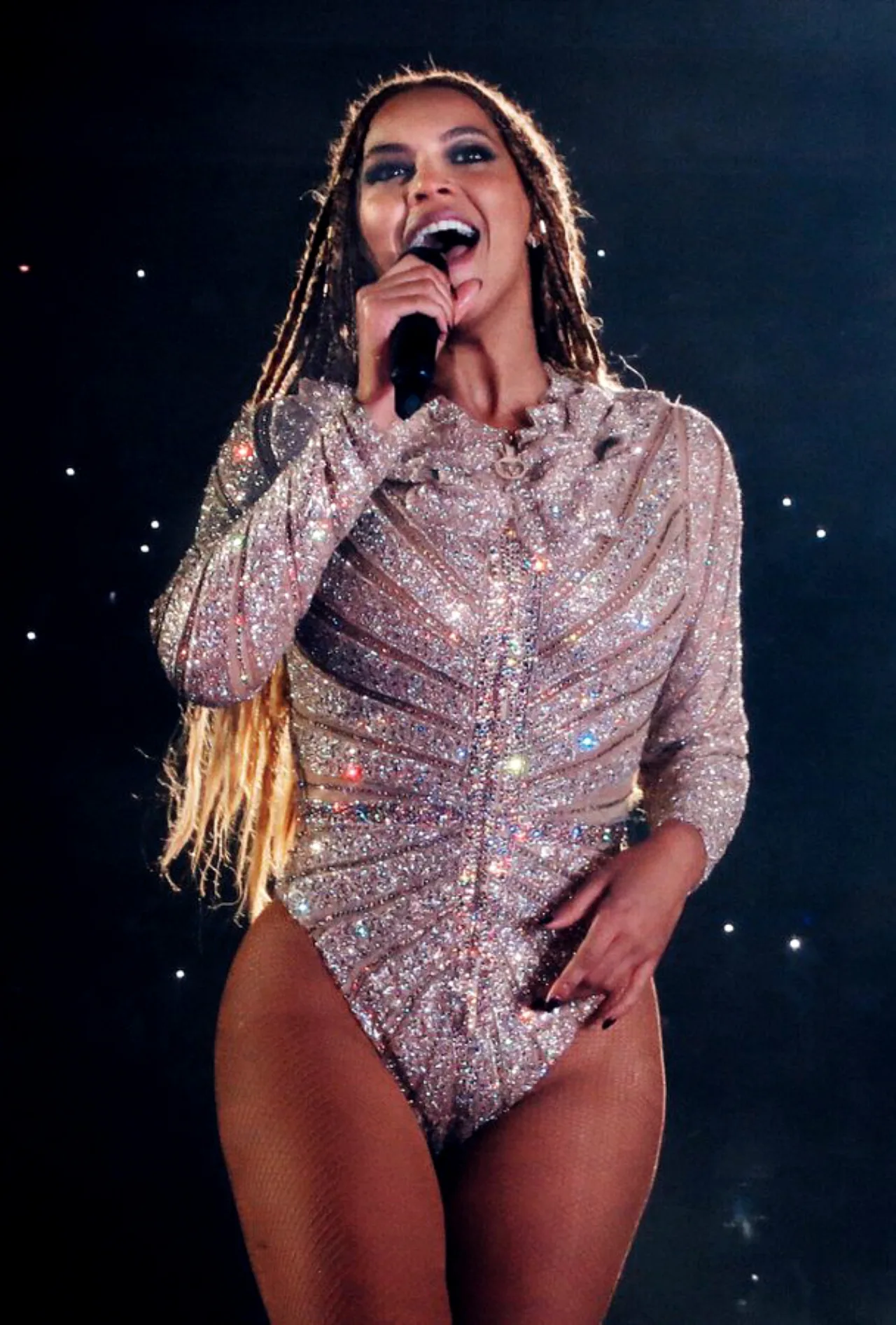
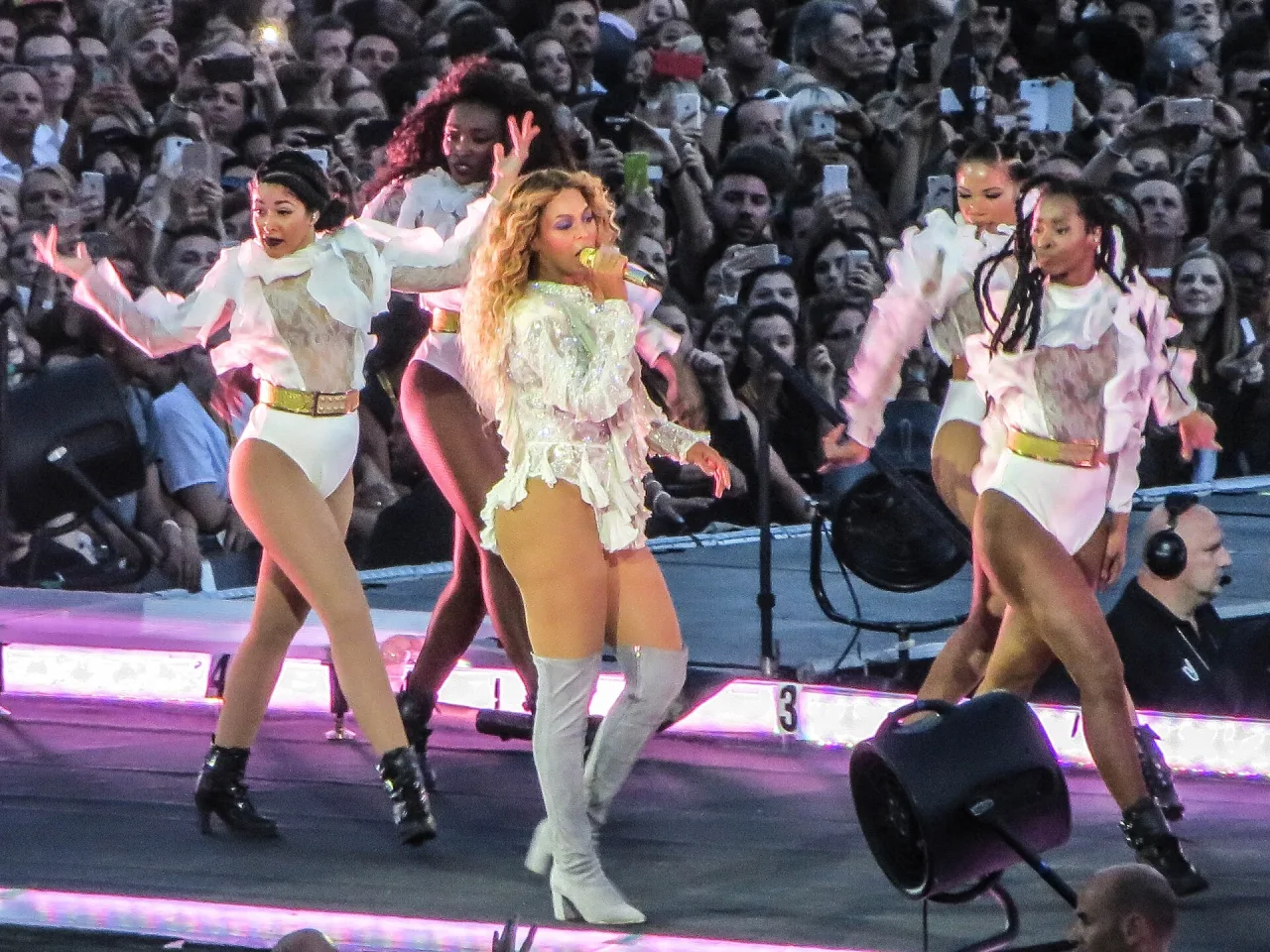
Crossing forty metres of runway while holding a phrase already demands cardio. Going round it while dancing demands an athlete. And even without a runway, walking the stage to work the crowd is an effort the breath pays for.
The protocol is old. Michelle Williams described the Destiny’s Child training under Mathew Knowles: singing while running on a treadmill, so the voice would hold live. That is where the famous image of Beyoncé singing while running comes from.
Taylor Swift prepared the Eras Tour for six months. Every day, treadmill, singing the whole setlist out loud: "fast for fast songs, and a jog or a fast walk for slow songs". Strength and conditioning at the Dogpound gym, three months of dance with choreographer Mandy Moore. Her own verdict: "I finally, for the very first time, physically prepared correctly."

Pink does an hour of cardio and an hour of yoga with her dancers before almost every show, and says it plainly: "sometimes I feel more like an athlete than a singer". On tour she counts around four and a half hours of physical work a day, the two hour show included, plus the rig check for the harness she sings in. Lady Gaga trains five times a week, thirty five minutes a session, with Harley Pasternak, and sings on the VersaClimber, meaning during the effort. Madonna works six days out of seven with Craig Smith: Tabata intervals, Pilates, yoga, barre, kickboxing.
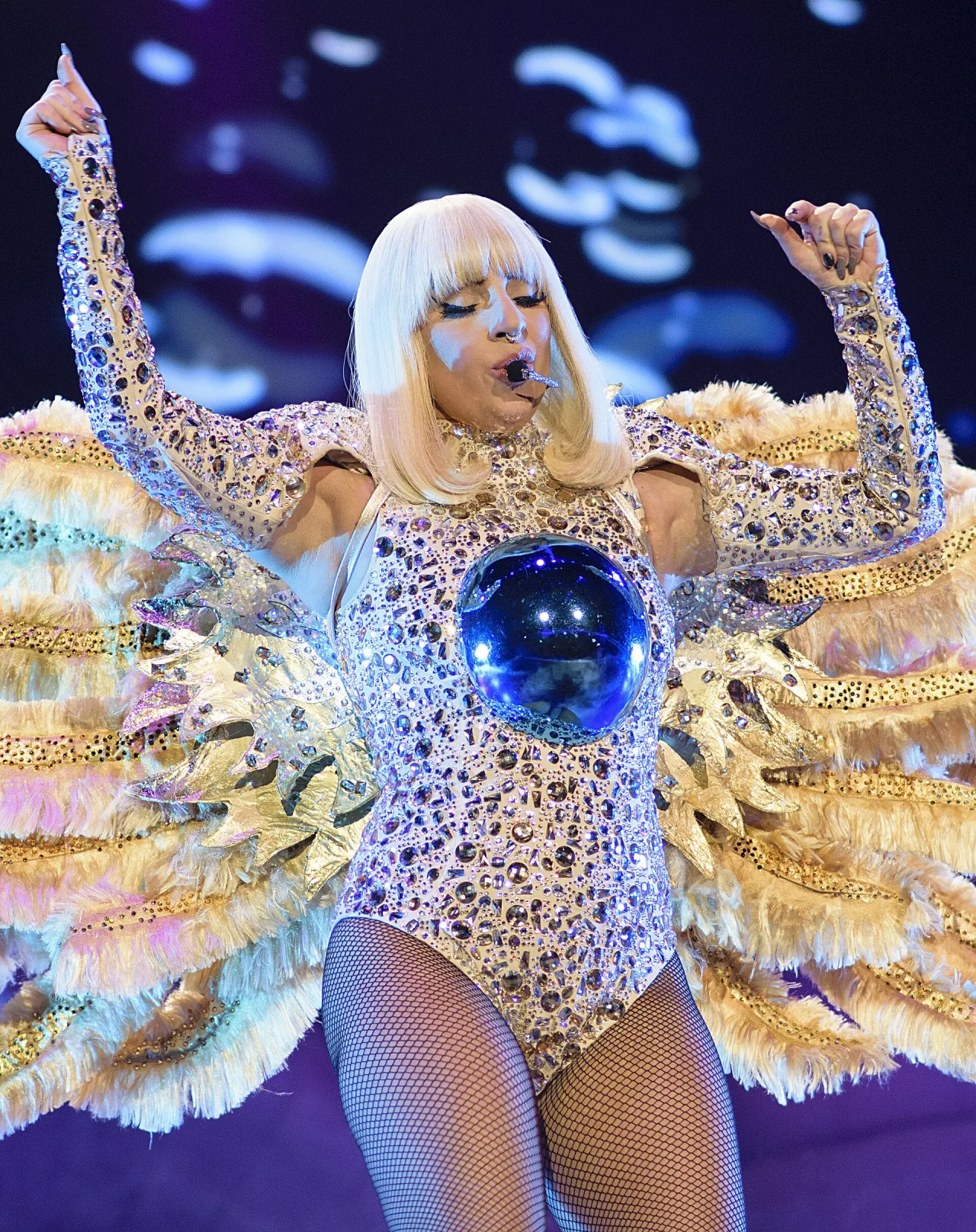
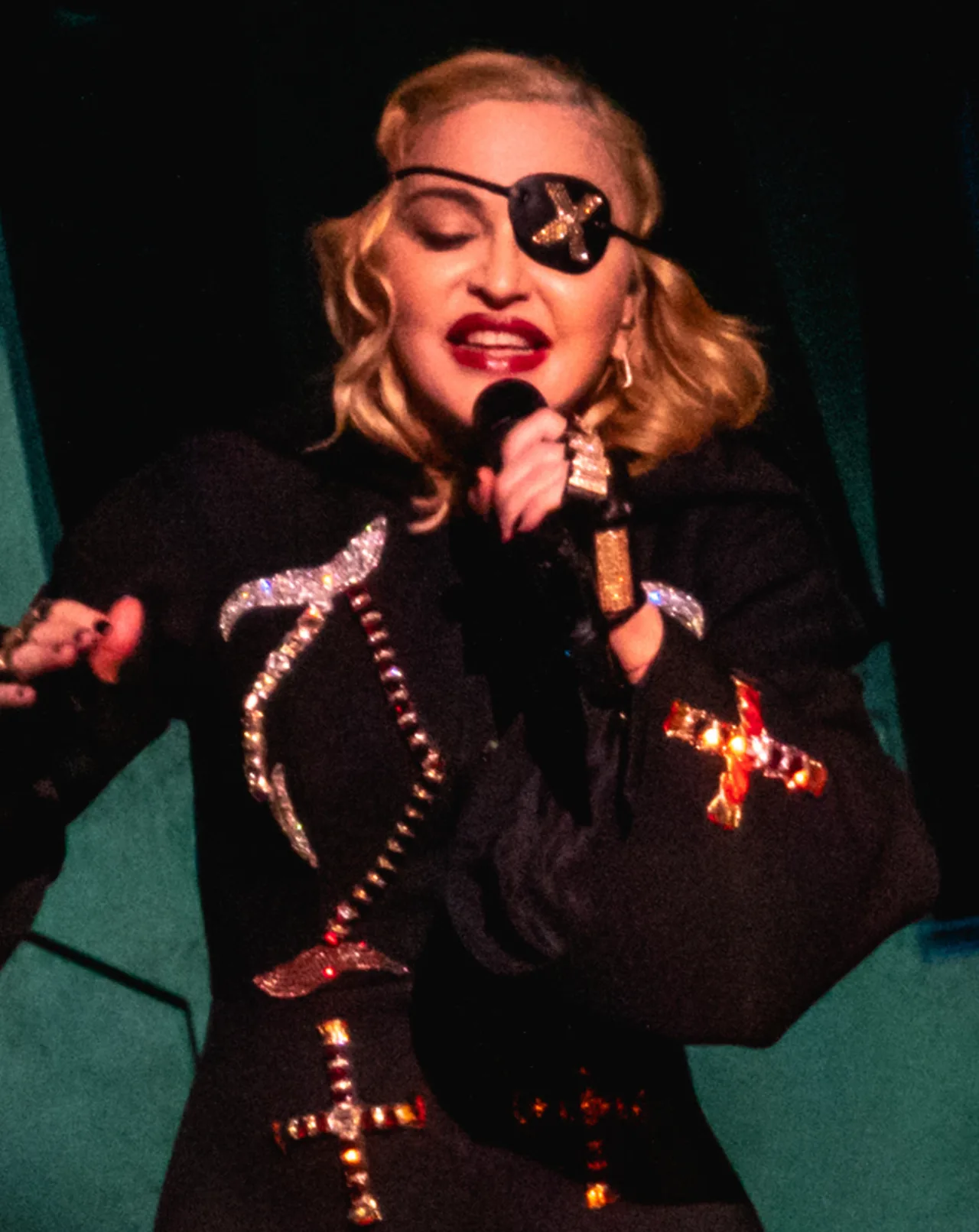
Mylène Farmer built her endurance with strength coach Hervé Lewis: running, weights, massage, a diet based on slow release sugars. In tour preparation, two to three hours of physical work a day, before the choreography rehearsals even began. The rhythm described by the artists is almost always the same: one or two sessions a week to begin with, then three, then five, and a taper just before opening night.
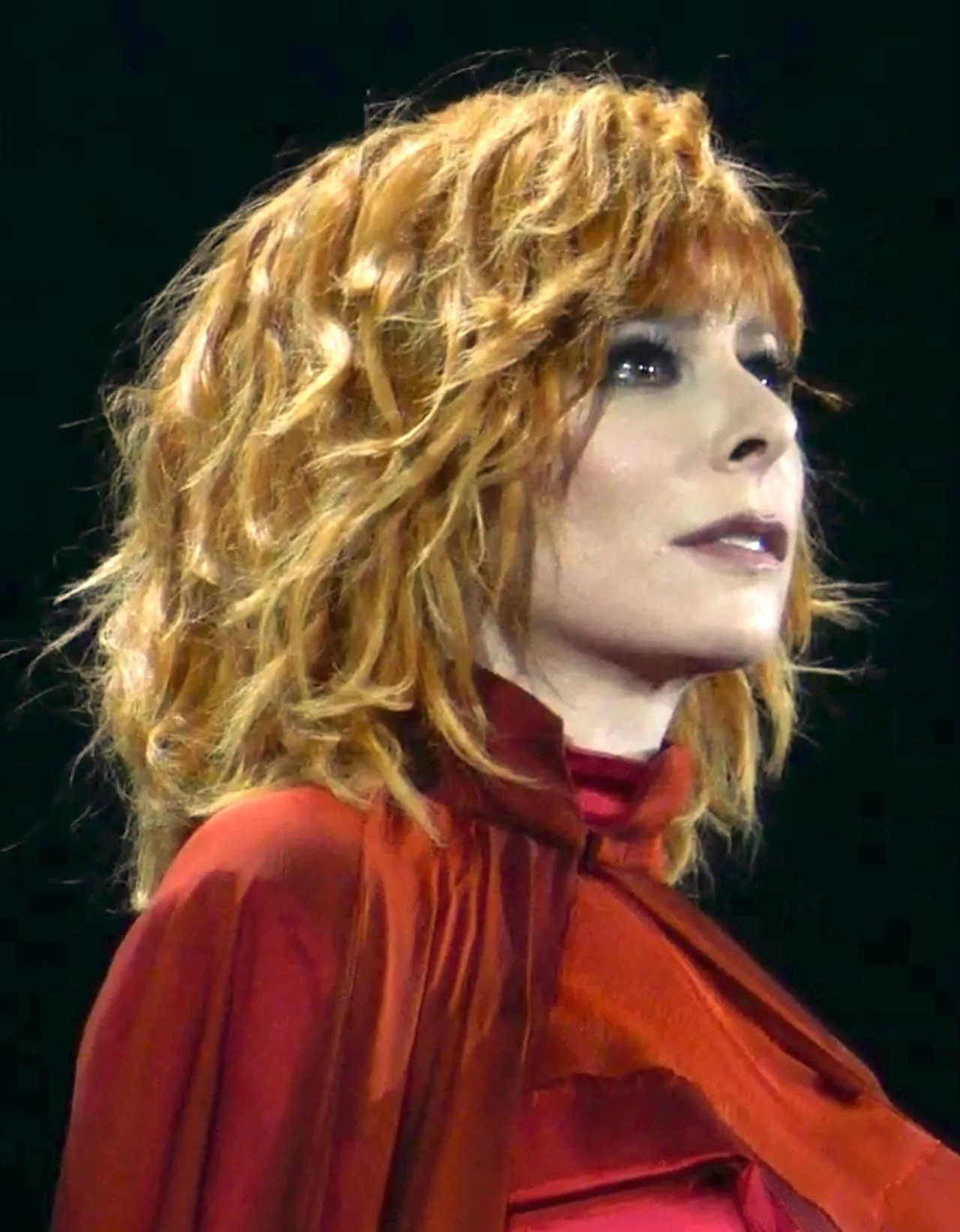
Yes, it is aesthetic. The outfits are fairly revealing, it is a matter of sex appeal that sells a dream, it comes from the dream industry. But at the same time, it was also about holding a stage.
BUILDING THE LOAD
Six months out, and progressively
Estelle Moltenis is a state registered physiotherapist specialising in sports physiotherapy. She follows elite athletes, notably in professional football and on the ATP circuit, at Roland-Garros and Wimbledon. At CALYP she works with singers on physical preparation, posture and recovery.
Her rule for a tour: start six months out at the very least, and build progressively. The training rhythm then increases, up to five sessions a week, before easing off ahead of the first date.
These sessions sit outside the dance sessions. An artist who dances already has choreography rehearsals, plus vocal coaching sessions. The training is added, it replaces nothing.
And as for any elite athlete, the other half of the protocol counts just as much: massage and osteopathy, done properly.
Singers are elite athletes of the voice.
OPERA IS WAKING UP
The Castafiore myth is collapsing, and it is collapsing in America first
Classical singing lived for a long time on the opposite belief: the Castafiore myth, the diva who supposedly needs no physical training to hold her coloratura. The voice as a gift that lands on a body and could do without it.
Adeline Toniutti teaches the opposite, and what she observes today is an international awakening.
According to the voice doctors who work with her, Adeline Toniutti was one of the first in the world to make this connection between strength work, cardio and vocal technique, more than ten years ago. It is the United States that is taking it up today. France is behind.
Thank you to those who show it
Two posts, sent by Adeline herself, say it better than any paragraph.
Jennifer Rowley (@larowley1), American dramatic soprano, founder of Aria Bootcamp.
Her words: "They are still saying opera singers should not lift weights. For decades, singers were taught that strength training would make the voice tight, interfere with breathing, or limit vocal freedom. But our voices do not exist in isolation: they are a part of the body. Training with intention has made me a stronger, more resilient performer. And it certainly did not stop me from singing dramatic repertoire. It helped me get there." She had been told she would never be a dramatic soprano. She worked her core, and she became one.
Maayan Licht (@maayanlicht), sopranist, with Maestro Fernando Cordeiro (@fernando_cordeiro_opa).
His voice is remarkable, close to a woman’s voice. And in this video you see him with his coach, training while he sings. His caption: "Being a singer is like being an athlete. It takes daily practice, focus, discipline, and ambition to keep the voice in top form."
Adeline Toniutti’s message to France is exactly this: wake up. Having voice means synchronising strength work, cardio and vocal coaching.
Thank you to those who show it
Well done and thank you to Jennifer Rowley (@larowley1) and Maayan Licht (@maayanlicht), as well as Maestro Fernando Cordeiro (@fernando_cordeiro_opa), for publishing this work and making it visible. These are accounts worth following.
MUSCLE, BUT NOT ONLY
Putting fascia at the service of the voice
A short, hard muscle does not sing better than an absent one. What carries the gesture, between the muscle and the sound, is fascia: the connective tissue that wraps and links the whole body. In Anatomie du Chant, posture is not only a matter of bones. It is also, Adeline Toniutti writes, "a new way of stretching your fascia so as to get a muscular response matching what we are about to ask the body to do, namely sing".
This is where Marie Zheng comes in, a friend of Adeline Toniutti and a Chinese therapist, who has massaged and accompanied artists before they stepped onto the stage of the Opéra Garnier. She signs one of the most concrete passages in the book on this subject.
Massage oxygenates the connective tissue, known as fascia, and promotes its elasticity. A singer needs a breathing, vibrating body, hydrated mucous membranes, and precise axes in their posture in order to have a wide respiratory amplitude. Massage optimises postural work, muscular training and osteopathic work.
She also states the limit, and that is what makes her point usable: "Massage does not replace good vocal technique, but it accompanies an artist ideally in their recovery and helps develop more suppleness to support the voice in performance."
Interviewed during the International Voice Symposium organised by CALYP in Milan, she described her role alongside the singers: "Through my work, working on the fascia, on the breath, on the energy, I unblock things in the body so that Adeline can more quickly let the singer achieve what they came for."
My watchword is suppleness. I am an artist who uses the oxygen between her fascia and her muscles, and who puts herself entirely at the service of the Music she has to serve.
In Incandescente pour toujours, Adeline Toniutti describes the body as a continuum: when you sing fully, "with the fascia, the one in the throat runs all the way down to the tip of the foot", in suppleness and harmony. This is what Marie Zheng calls "singing in the legs".
Osteopath Jean-Marie Legé, who also follows CALYP singers, reasons the same way through fluids: where the fluids circulate, healing has begun. Muscle, fascia, circulation are three storeys of the same instrument.
IN THE BOOK
Anatomie du Chant offers classical barre exercises to be done while vocalising, to develop suppleness, tone and awareness of your fascia all at once: singing while working turnout and turn-in and demi-pointe, beginning a side split movement, singing with one foot resting outward on the piano stool. By freeing the hips, these exercises free the pillars of the diaphragm, into which the psoas is woven.
THE MECHANICS
Why muscle commands the voice
The lungs have no motor. Air is moved by the diaphragm, the intercostals, and for the active exhale of singing, by the abdominal sling: transversus, obliques, rectus abdominis.
In Anatomie du Chant, osteopath Jean-Marie Legé explains the role of the obliques: they form a lever arm that lets you command your diaphragm. The movements of the diaphragm bring more or less pressure into the lungs.
It is an adjustment of air, precision mechanics. Not a matter of brute force.
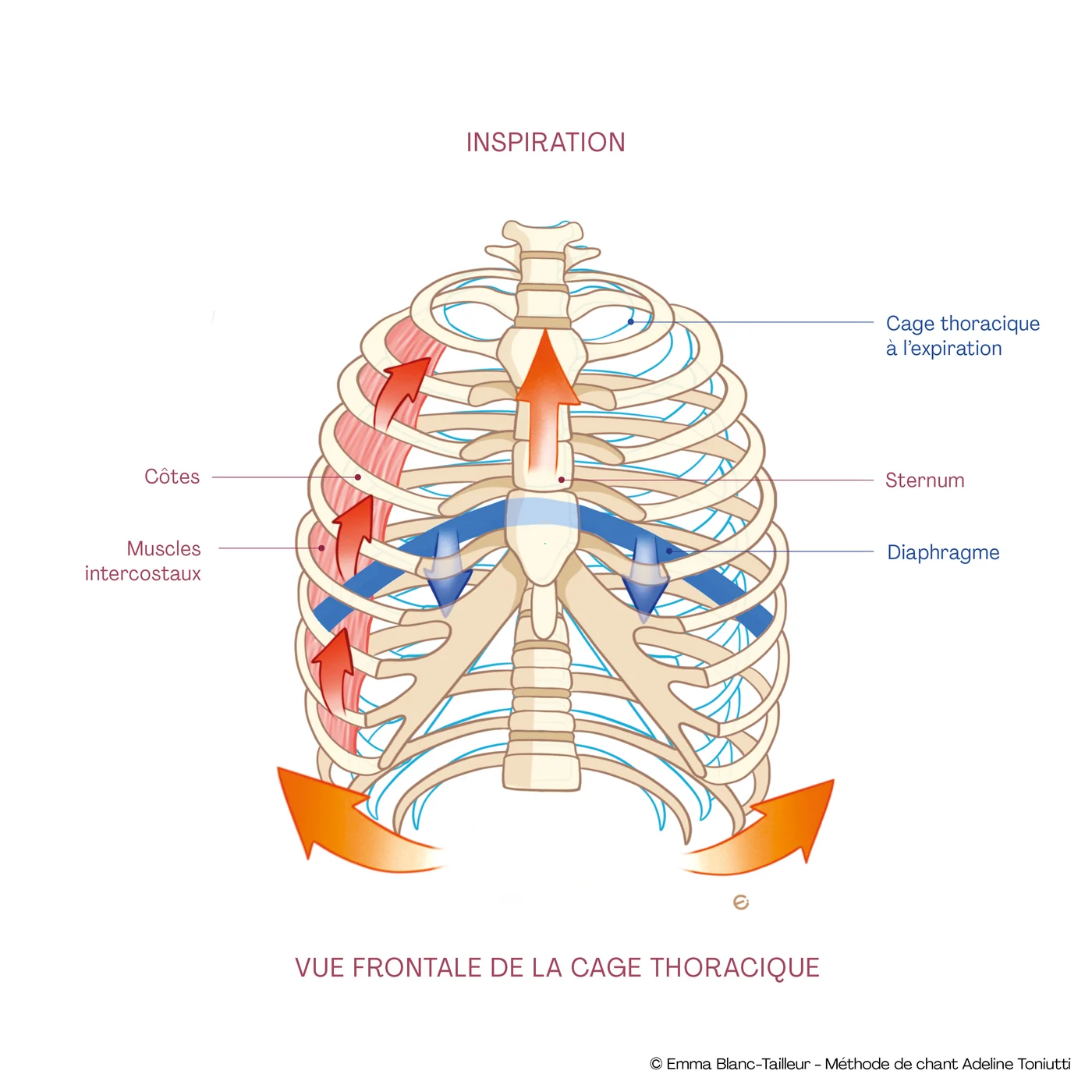
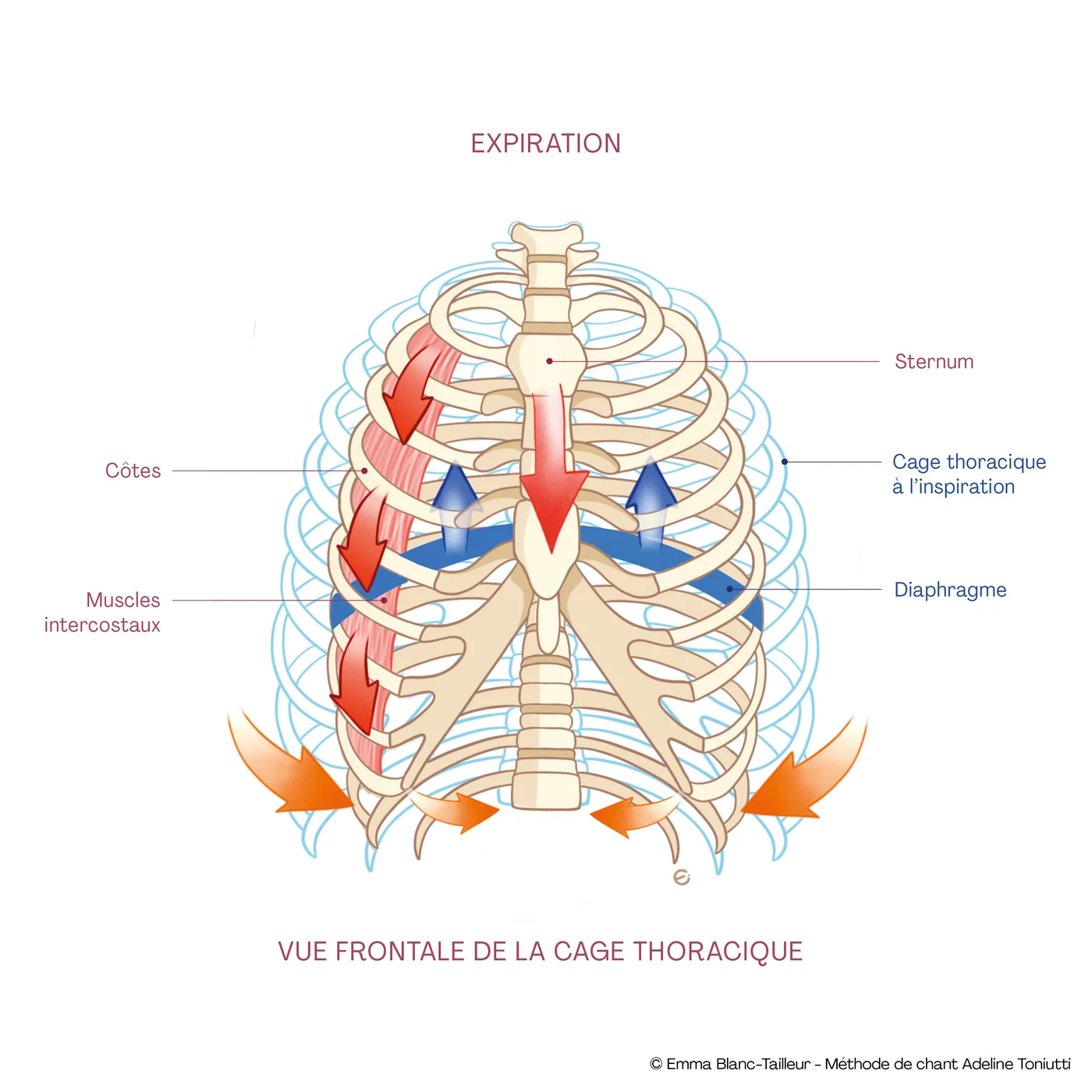
Illustrations © Emma Blanc-Tailleur, Anatomie du Chant, Adeline Toniutti
This is the heart of the five pivot points. And it is why teachers who instruct "sing with a relaxed belly, no core work" create a real problem: that instruction runs against medicine and against current research.
It may have worked for some singers. Over the long term, it has not worked.
Singing teachers who say you should sing with a relaxed belly, that you should not work your core, are against medicine and against the latest research. It is nonsense.
FORTY
The age when the bill arrives
Adeline Toniutti discusses it with the ENT specialists and surgeons she works with: the operations arrive around forty. A career has been built on suppleness, in opera, up to that point. At forty you are more tired, you recover more slowly, and you do not have enough muscle to support the voice.
The figures point the same way. From the age of 40, an inactive person loses in the order of 5% of their muscle mass per decade, around 1% a year, and the loss accelerates between 50 and 60. Menopause and andropause sharpen the effect, the drop in oestrogen accelerating muscle loss in women.
This could explain why singers suddenly need vocal fold surgery at forty: their folds were no longer receiving sufficient muscular support. The body was no longer supporting what was being asked of them.
The same mechanism appears, faster, after a pregnancy. Many women struggle to find their voice as it was, because the abdominal wall has slackened and the muscle has to be rebuilt. An article on this subject, prepared from interviews with voice doctors, will be published on this site shortly.
And who pays for it in the end? The vocal folds. They are the ones that end up with lesions, because the body did not support properly.
THE BLIND SPOT
Training is not enough. You have to sing during the effort.
Even on television talent shows, at the Star Academy for instance, the students train physically. That is not the problem. The problem is that the training is too often disconnected from vocal practice.
This is exactly what the CALYP position says: vocal coaching has to refocus and connect itself to physical training, one does not go without the other. The singer has to understand what their own muscles do for them when they sing. When you train alone, in your corner, you do not necessarily see the link.
Hence the instruction: sing while doing the workout movements, the crossfit, the running. Do the training at the same time. That is how Lady Gaga uses her VersaClimber, how Taylor Swift used her treadmill, how Destiny’s Child were trained.
This requires singing teachers trained to run those sessions. And they never are, except those who go and acquire the skill themselves, like the coaches in the videos above.
This is what CALYP teaches, and it is why people travel for it. They come from New York, from Los Angeles, from Korea and from all over the world for the support of CALYP.
If you do the training on its own, you do not necessarily see the link with vocal practice. You have to sing at the same time as you train.
IN PRACTICE
1. Start six months out, progressively. One or two sessions a week, then three, then five. Ease off before the first date. These sessions are added to dance rehearsals and vocal coaching.
2. Sing during the effort, not after. Running, workout and crossfit movements, singing at the same time. That is where the singer sees the link between their muscles and their voice.
3. Complete it with suppleness and recovery. As for an elite athlete, massage and osteopathy done properly, for the elasticity of the fascia as much as for the rest.
The vocal gesture itself is worked with the five pivot points of Anatomie du Chant. In case of vocal fold pathology, the opinion of an ENT specialist or a phoniatrician comes before any training programme.
CALYP
Work the body and the voice together
The method is in Anatomie du Chant (Marabout, 2024). To work on it with the CALYP team: book an appointment.
Frequently asked questions
What is the "body" that is missing from a voice?
It is a sensation of timbre that teachers describe. Behind it there is muscle that was never built to support the voice. It is not a missing gift, it is tissue to be built.
Does strength training damage the voice?
No. That is an old belief, still widespread in France. The abdominal sling commands the exhale of singing. Without it, the pressure falls back on the larynx.
Should you sing with a relaxed belly?
No. For Adeline Toniutti, that instruction runs against medicine and against current research. The obliques act as a lever arm on the diaphragm, and that is what makes precision possible.
Is muscle enough?
No. Suppleness is needed too. Massage oxygenates the fascia and promotes its elasticity, which optimises postural work and muscular training. Marie Zheng makes the point in Anatomie du Chant: massage does not replace good vocal technique, it accompanies it.
When should physical preparation start before a tour?
Six months out at the very least, progressively, according to Estelle Moltenis, the sports physiotherapist who works with CALYP singers. One or two sessions a week, then three, then five, with a taper before the first date. These sessions are added to dance rehearsals and vocal coaching.
Is training enough, or do you have to sing at the same time?
You have to sing during the effort. Training disconnected from vocal work does not create the link. Beyoncé and Taylor Swift sang on treadmills, Lady Gaga sings on the VersaClimber.
Why do some singers need surgery around forty?
Muscle mass drops by around 1% a year after 40, and menopause and andropause sharpen the loss. A technique built only on suppleness has no reserve left to compensate, and the strain falls back on the vocal folds.
Why did my voice change after giving birth?
The abdominal wall has slackened. Until the muscle is rebuilt, the support is missing. A detailed article on pregnancy and the voice will be published shortly.