Language Disorders in Children and Teenagers
VOICE CLINIC
Adeline Toniutti and CALYP offer a unique singing-based method to address language disorders in children and teenagers, grounded in the latest neuroscience research, developed with 26 doctors and specialists, and now expanding internationally.
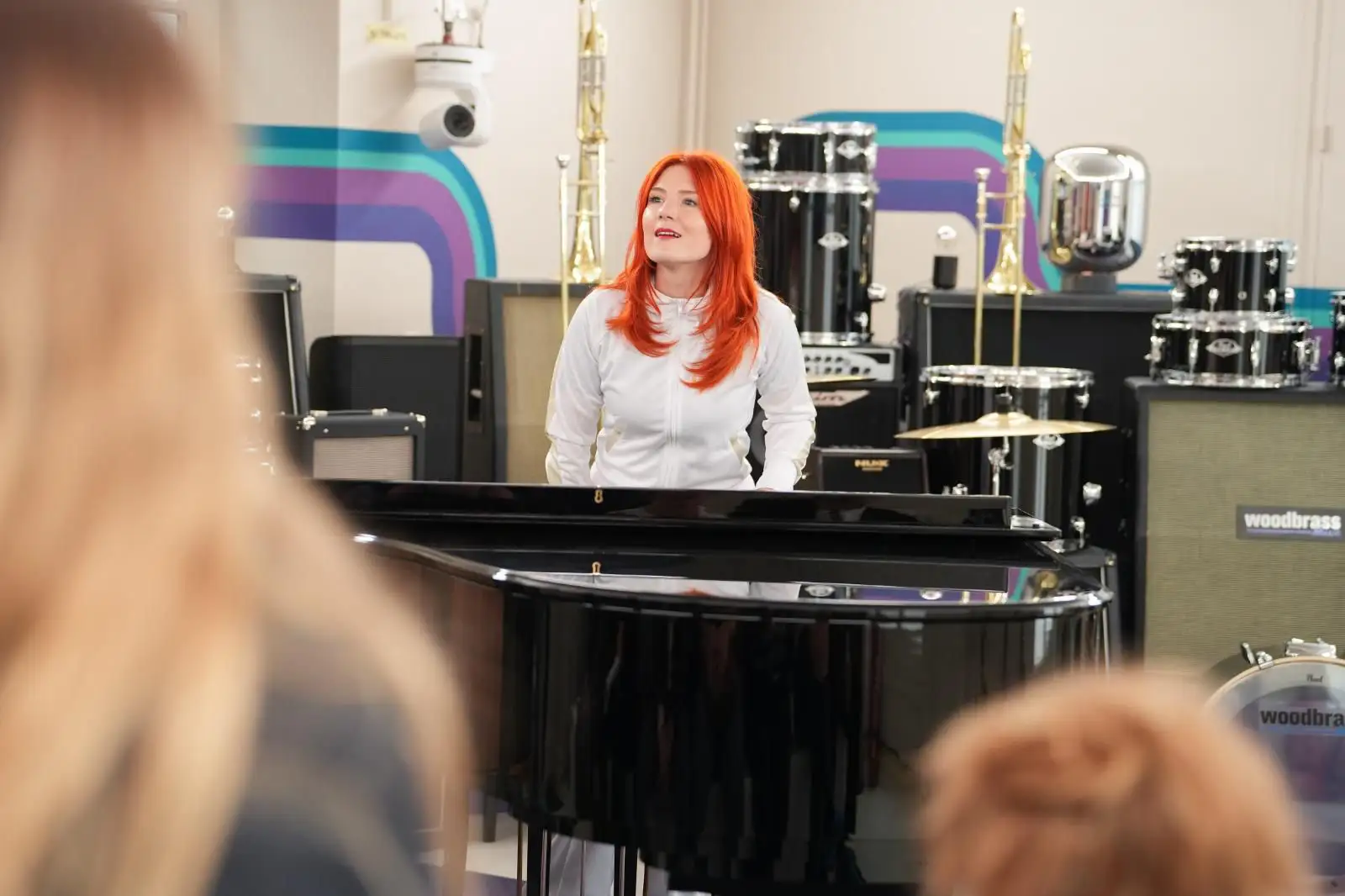
I see more and more children and teenagers affected by language disorders or developmental language delay, whose parents come to me when the standard care pathway has run out of solutions. With my teams, we offer a singular approach where coaching becomes a genuinely enjoyable and playful moment for your child or teenager, and that has produced rapid, measurable progress.
We take into account the uniqueness of each child or teenager and the specifics of their situation. Drawing on the latest research in the field, in a play-based format, a connection forms during the session that allows for rapid improvement of the disorder.
Beyond that, the family finds peace again and rebuilds itself.
SCIENTIFIC INSIGHT
Questions to Dr Gilles Zah-Bi
Neurosurgeon Dr Gilles Zah-Bi answers the questions parents ask most often about child language disorders, developmental language disorder, and the brain mechanisms behind speech and language.

© Emma Blanc Tailleur
CHILD LANGUAGE DEVELOPMENT
At what age does a child develop language?
The first words appear around 12 months, followed by a "lexical explosion" around 18–24 months. Between ages 3 and 5, sentences become more complex and grammar takes shape.
By age 5–6, most speech sounds are mastered and the child can clearly structure their ideas. This is the key age for entering reading and writing, and the moment when early signs of dyslexia, dysphasia, or other developmental language disorders typically become detectable.
DIAGNOSIS
Does my child have a language disorder or just a delay?
Language delay
A delay is a temporal gap that still follows a normal developmental trajectory. The child progresses with appropriate stimulation and catches up with peers, often without specialist intervention.
Language disorder
A disorder is atypical and persists despite stimulation. It requires specialised care, typically a combination of speech-language pathology, ENT and neurological assessment, and adapted educational support.
UNDERSTANDING THE CAUSES
What are the main causes of language disorders in my child?
Language disorders in children can have neurological, genetic, auditory, or neurodevelopmental origins. Environment also plays a decisive role: a lack of verbal stimulation, screen overexposure, or an unstable emotional context can all slow language acquisition.
An early diagnosis allows for an appropriate treatment plan and personalised support to help the child progress, and to prevent secondary impacts on reading, writing, and self-confidence.
SCREENS AND LANGUAGE
My child is overexposed to screens, what's happening?
Screen overexposure reduces the human interactions that are essential to your child's language development. It decreases stimulation of the frontal and temporal areas involved in communication and processing speech sounds.
Screens cannot replace verbal exchange: it is through dialogue, play, and singing that a child builds language. Reducing screen time and prioritising interactive activities is a first step toward natural rehabilitation.
© Emma Blanc Tailleur
SPECIFIC DISORDERS
What are the different language disorders?
Articulation difficulty
The brain plays a central role through the motor areas (motor cortex, Broca's area). Fine tongue-and-lip coordination relies on precise neurological circuits.
Dysphasia (developmental language disorder)
A neurodevelopmental disorder primarily involving the left temporal and frontal regions. It is not linked to intellectual or sensory deficit.
Communication delay and ASD
In autism spectrum disorder, the brain's social networks (prefrontal cortex, amygdala, temporoparietal junction) function differently. This affects communication and social understanding.
Cognitive-origin disorder
Linked to a global intellectual or neurological deficit. Language is affected because it depends on general cognitive abilities.
Environmental-origin disorder
A lack of stimulation reduces the brain plasticity of language areas. The good news: well-targeted stimulation can significantly improve outcomes.
ADHD
Attention deficit with impulsivity, linked to the prefrontal cortex. It can disrupt communication because the child interrupts, struggles to wait their turn, or organises their ideas poorly.
Dyslexia
A specific reading disorder linked to the left temporoparietal circuits. Intelligence is normal, but decoding written sounds is difficult, and singing is one of the most effective complements to dedicated reading rehabilitation.
SOLUTION AND REHABILITATION
Singing as a language-rehabilitation solution
Singing is a particularly powerful rehabilitation tool as a complement to ongoing speech therapy. It simultaneously stimulates rhythm, breathing, articulation, and auditory memory, every fundamental of language.
For children, singing provides a playful, emotional framework that fosters natural learning. Unlike conventional drill exercises, it engages the child through pleasure, which accelerates progress.
This is the approach CALYP has developed to offer a true complementary treatment for language disorders in children, music therapy for language, grounded in clinical neuroscience and combined with the work of qualified speech-language pathologists.
© Emma Blanc Tailleur
NEUROSCIENCE
Which brain areas does singing activate?
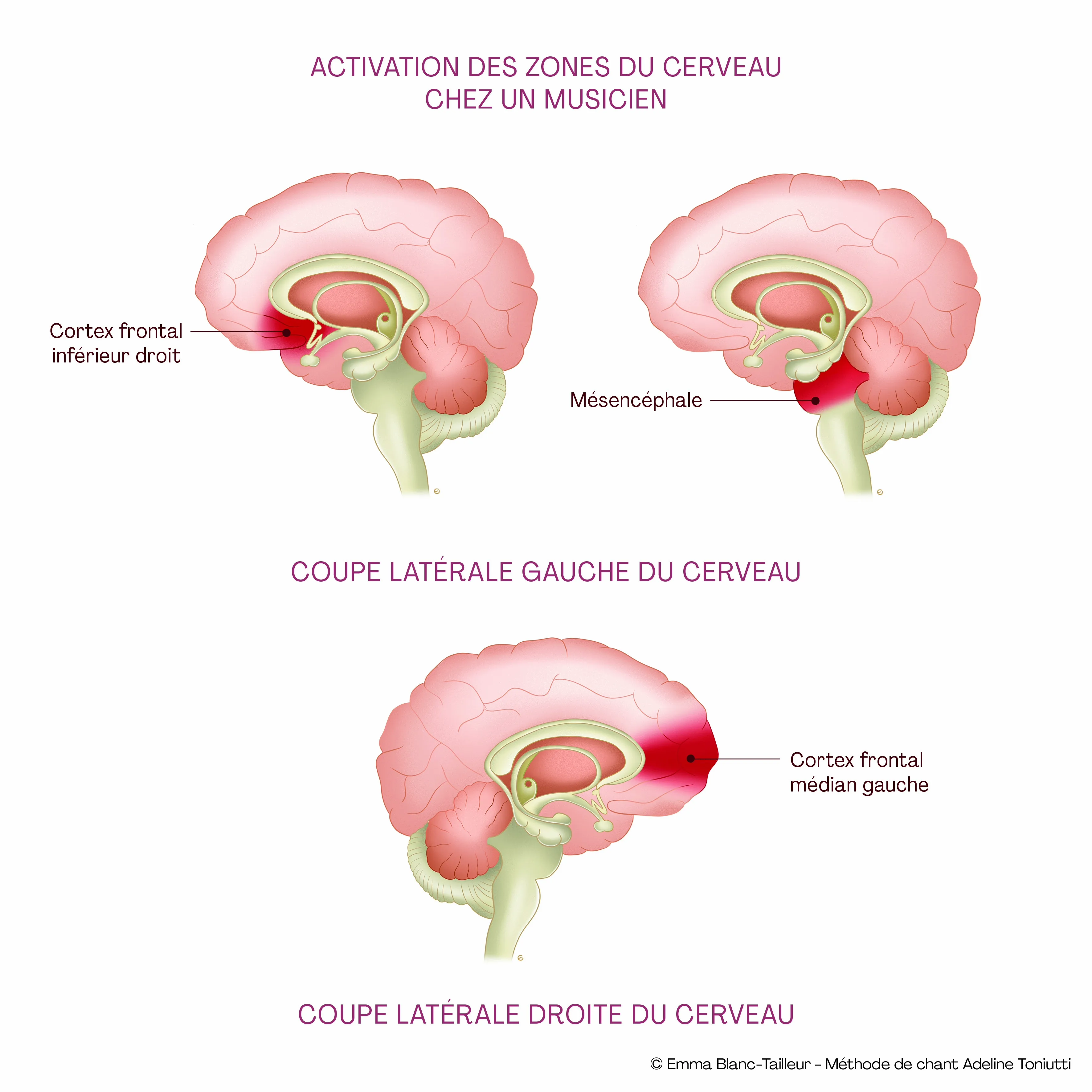
Singing engages a far broader brain network than speech alone: Broca's area, the motor cortex, the auditory cortex, the cerebellum, and the basal ganglia, plus the limbic system through emotion and Wernicke's area through language comprehension.
Musical training reinforces the connections between auditory and motor areas, improving the synchronisation of speech, breathing, and articulation. This wide cortical recruitment is precisely what makes singing a natural remedy for children with language disorders.
RHYTHM AND LANGUAGE
Rhythm and musical language: a major asset for rehabilitation
Musical rhythm trains the frontostriatal circuits and the cerebellum, which govern the cadence of speech. Scientifically, measurable improvements are observed in prosody (the music of speech) and syllabic segmentation.
This is functional reorganisation through neural plasticity: rhythm and melody facilitate access to language circuits. For a child in difficulty, clapping in rhythm or singing a nursery rhyme becomes a powerful and natural rehabilitation exercise.
SINGING AND THE BRAIN
Singing: the brain's coach
Singing broadly activates both hemispheres of the brain, particularly the musical regions of the right hemisphere. Speech is mostly handled by the left hemisphere; switching from one to the other creates a genuine functional bridge between language and music.
Through brain plasticity and the emotional engagement it triggers, singing facilitates memory encoding and verbal fluency. It is a complete training programme that works on memory, attention, and motor coordination, the pillars of language.
For children with developmental language delay or a language disorder, singing offers a way around the classic blockages of conventional rehabilitation by going through pleasure and emotion first.
SUPPORT
Does your child have language difficulties?
CALYP supports children with language disorders through a unique approach combining vocal coaching and neuroscience. A playful, personalised treatment that complements existing speech therapy.
THE METHOD
The Adeline Toniutti method
Adeline Toniutti has worked extensively with children affected by autism spectrum disorders, language disorders, and emotional difficulties. Through her remarkable energy and the support of her medical team, she has achieved outstanding results in France and Switzerland.
She is committed to helping the younger generation grow and to easing what makes them suffer in the digital revolution our society is going through.
With her book published in France and Russia, the result of singing work and collaboration with 26 doctors and specialists of the body and voice (ENT surgeons, phoniatricians, speech-language pathologists, physiotherapists, and more), Adeline Toniutti is the internationally recognised reference on everything voice-related.
Anatomy of Singing: the 5 pivot points
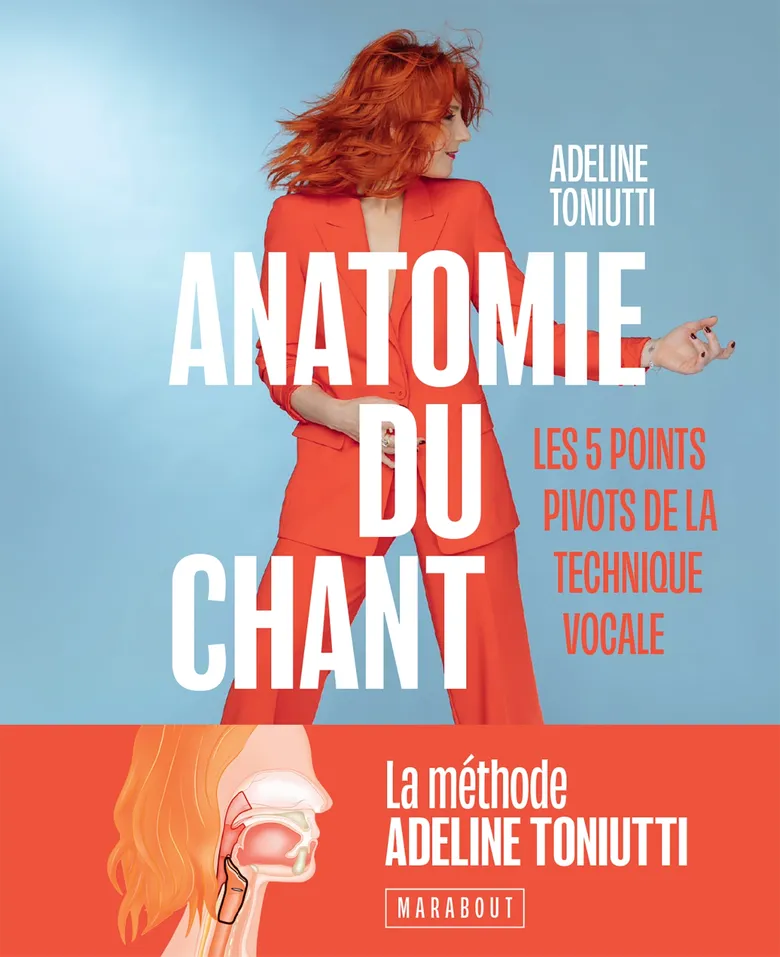
Her method rests on 5 essential pivot points that synchronise vocal work with brain work:
- Refine your posture
- Trigger the correct laryngeal movement
- Optimise exhalation
- Resonate the sound
- Articulate vowels and consonants
The 5 pivot points form an anatomical and physiological recipe and provide the bodily landmarks needed for singing. The aim: to feel the mechanisms in action in your own body that are specific to vocal technique. These pivot points free the singer from their constraints, allowing them to meet the demands of multiple repertoires, from contemporary music to opera.
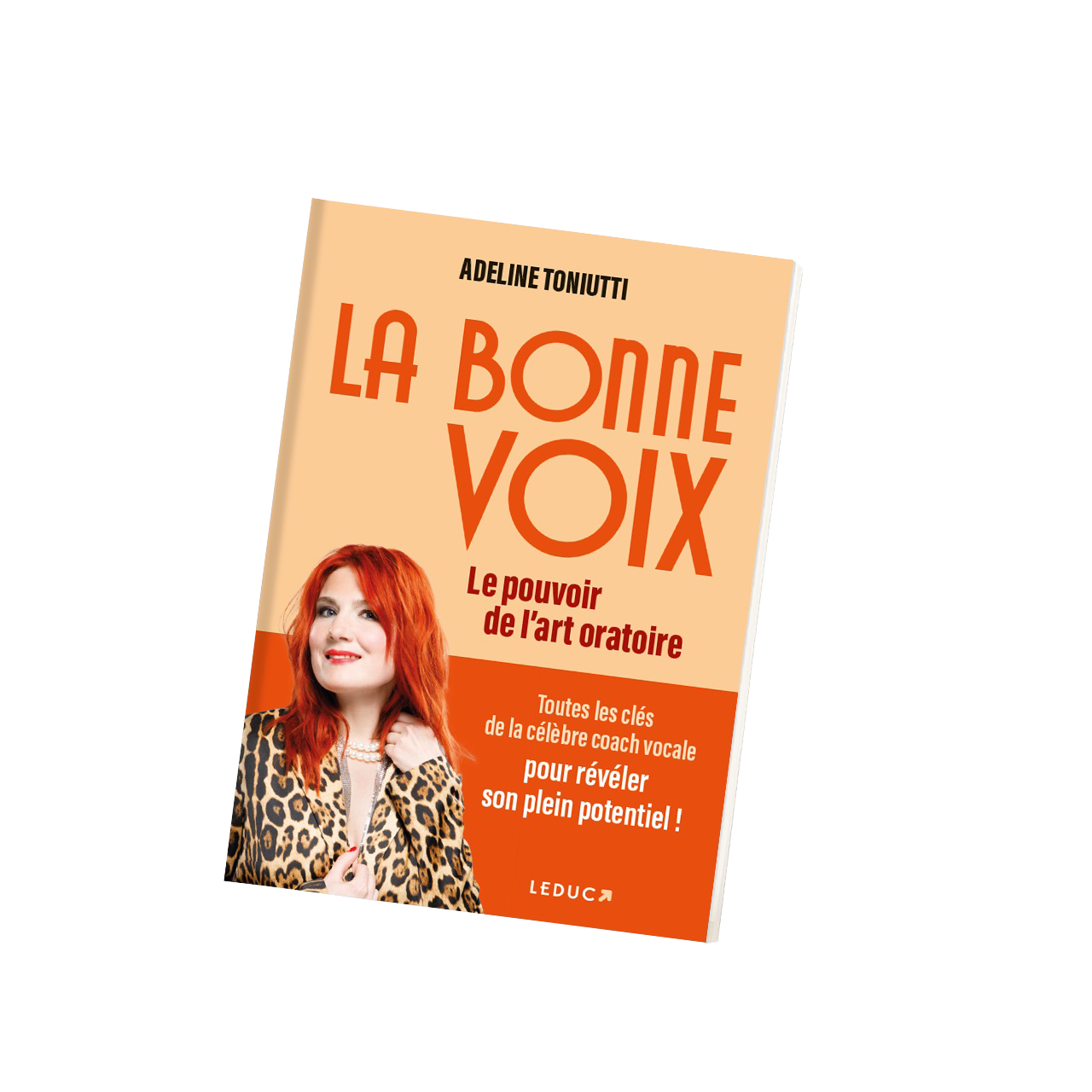
THE BOOK
La Bonne Voix
Adeline Toniutti's latest book, published by Editions Leduc
The voice is the queen of life. With Adeline Toniutti, find in your voice a powerful lever of self-confidence. Learning to shape it will influence the course of your life, your voice is your most legitimate defender in every circumstance: knowing how to speak in public is an art, whether for a job interview, a meeting, an exam, or any situation where you need to be convincing.
Francis Huster, Liane Foly and a host of experts (lawyer, police officer…) and medical specialists contribute throughout this guide to share their valuable experience of the voice.

SCIENTIFIC CONTRIBUTOR
Dr Gilles Zah-Bi
Neurosurgeon, MD, MSc Neuroscience
- Practitioner at Hôpital Foch, Suresnes (France)
- Office: 22 bis rue Georges Bizet, Paris 16th
- Member of the French Society of Spinal Surgery (SFCR)
- Member of the French Society of Neurosurgery (SFNC)
- MSc in Neuroscience (Université Paris Descartes)
SPECIFIC CASES
Specific questions
HEARING AND DISEASES
Can illnesses delay my child's language?
Yes. Repeated ear infections (otitis media), hearing loss, and neurological conditions can disrupt language acquisition. Any prolonged hearing loss directly impacts your child's language development.
An audiological assessment is often the first step recommended to rule out hearing-related causes before considering other explanations.
BILINGUALISM
Does bilingualism delay language?
Well-supported bilingualism does not delay language. Confusion arises mainly when exposure is unstable or qualitatively poor.
In a rich, structured environment, a bilingual child develops language skills at the same pace as a monolingual peer, and often shows enhanced phonological awareness, an asset for later reading.
DEDICATED GUIDES
Go deeper, disorder by disorder
Each language disorder has its own warning signs, key ages, and care pathway. Below are the dedicated guides written by Adeline Toniutti and reviewed by Dr Gilles Zah-Bi.
EARLY YEARS, 0–5
Language delay
Detailed child language development milestones (12 months, 18 months, 2 years, 3 years), warning signs of developmental language disorder, who to consult and in what order: paediatrician first, then audiologist and speech-language pathologist (SLP).
PRIMARY – MIDDLE SCHOOL
Dyslexia
Dyslexia symptoms by age, diagnosis pathway, school accommodations (in France: PAP, Plan d'Accompagnement Personnalisé, PPS, Projet Personnalisé de Scolarisation), and dyslexia-and-singing rehabilitation alongside speech therapy.
TELLING THEM APART
Dyslexia or dysphasia?
Detailed comparison: ages of onset, diagnostic criteria, and care pathway. How to tell apart a specific reading disorder (dyslexia) from a developmental language disorder (dysphasia) in your child.
ATTENTION
ADHD and language
ADHD symptoms by age, the three subtypes (inattentive, hyperactive-impulsive, combined), under-diagnosis in girls, the well-documented link with dyslexia, and how singing supports attentional regulation.
GOING FURTHER
Discover the CALYP method
The work with children extends what Adeline Toniutti and her team have practised for ten years: vocal technique, spoken and sung voice, and multidisciplinary medical support.
THE METHOD
Anatomy of Singing
The 5 pivot points validated by 26 doctors and specialists, Adeline Toniutti's pedagogical method.
RETREATS
International masterclasses
Intensive singing retreats in Brittany and Paris, led by Adeline Toniutti. All levels welcome.
THE TEAM
Voice specialists
ENT surgeons, phoniatricians, neurosurgeon, speech-language pathologists, physiotherapists, psychiatrists, the CALYP multidisciplinary team.
BOOK AN APPOINTMENT
Does your child have language difficulties?
CALYP offers personalised support combining vocal coaching and medical expertise to help children overcome language disorders. Our method complements existing speech therapy and adapts to each child's pace.