
Stage preparation protocol
A backbone, to be adapted by every artist
There is no single protocol that fits a pop tour and an opera production. Here is the list of subjects that have to be settled beforehand, so that nothing is discovered on the day.
WHAT THIS PAGE IS
A skeleton, not a recipe
An opera singer who rehearses three weeks inside the theatre and a pop artist running forty dates do not have the same protocol. What follows is a backbone: the list of subjects to settle so that a tour runs in the best possible conditions.
Adeline Toniutti’s rule is not that every singer should do everything here. It is that every singer should have decided about everything here.
Almost everything on this list is anticipation. The day of the show is the worst possible moment to test anything.
HYDRATION
Water is drunk before, not during
Osteopath Jean-Marie Legé gives the figure that changes the whole planning: digesting water takes six hours. Food is restoration, it compensates an effort afterwards. Hydration, by contrast, has to be anticipated ahead of the effort.
For an hour of singing, count roughly half a litre at least two hours ahead. Adeline Toniutti’s own rule for an 8pm show: two litres of water before 2pm.
On a plane, cabin air is very dry and the body spends about half a litre per hour and a half of flight. An artist landing the day before a date is therefore already behind on hydration before the soundcheck has even started.
Feeding the body works differently depending on whether you consider food or drink. Food compensates an effort. Hydration through drink, on the other hand, has to be anticipated.
FOOD
The meal is chosen once, then tested
There is no universal answer. Some go on stage fasting. Opera singers have told Adeline Toniutti that they eat a large meal in the afternoon and only take a small snack before walking on.
What matters is that this meal becomes a fixed point: chosen around your own allergies, with enough carbohydrate to hold the whole show, and above all tested in real conditions. You eat it, you sing straight after, and you watch whether digestion slows you down. A meal you have never sung on is an experiment you are running in front of the audience.
Alcohol is strongly discouraged, as is smoking any substance: it alters the mucous membranes and unbalances the pH of the stomach. Conversely, it helps to have your small ritual, the one that reassures you.
SHOES AND COSTUMES
What you wear on stage is rehearsed, and doubled
A heel changes the curve of the spine, and therefore the muscular support available for singing. This is not a comfort question, it is a breathing question.
The performance heel is therefore worn long before the performance. Never on the day of the casting, never on the day of the concert. And the reverse holds too: going from heels to flats is also a change, and it needs its own adaptation period. Anatomie du Chant is explicit about this: rehearse in your stage shoes, and schedule a rehearsal in costume. Always plan a second pair, because one of them breaks.
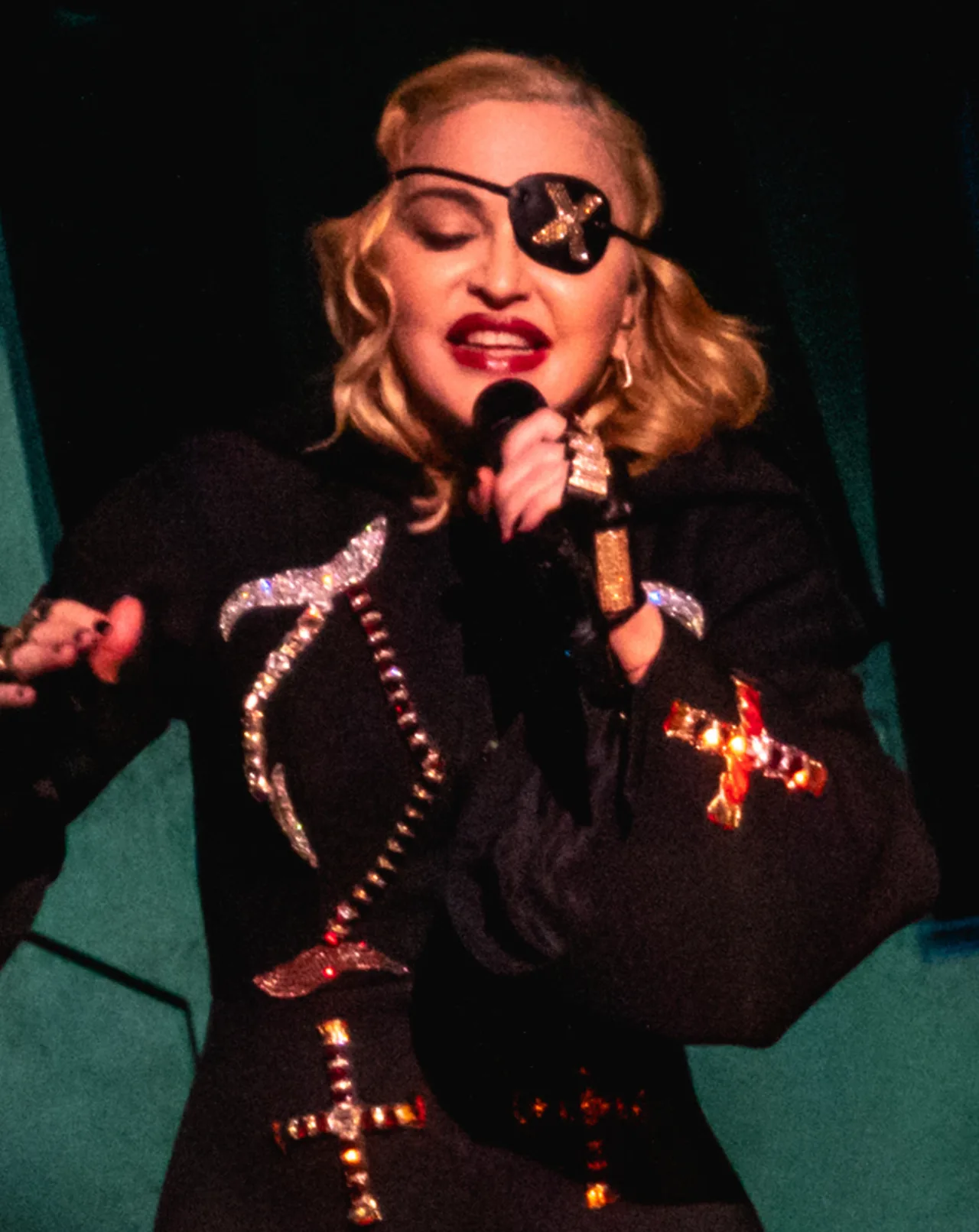
Costumes get the same treatment: test every movement you will actually make in them. You need doubles, triples. And if you handle fire on stage, the costumes must be flame-retardant. A professional stylist knows this. Someone starting out does not.
Adeline Toniutti split a costume attempting the splits, on the night of the Freddie Mercury tribute concert given at the Théâtre de la MALS in Sochaux, on 20 November 2021. She was putting it on for the first time that evening.
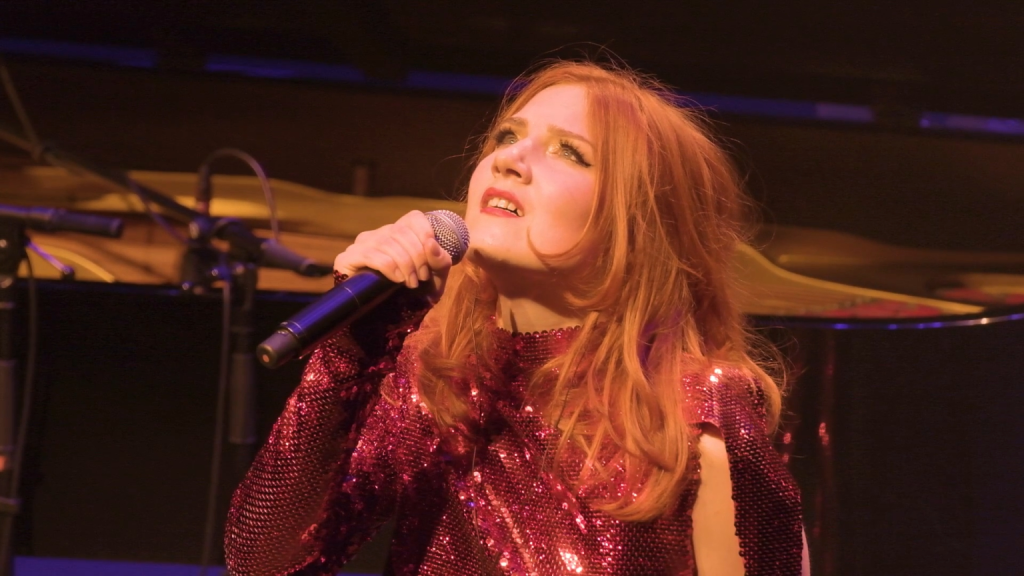
This is exactly the mistake this chapter asks you to avoid, made by the person who teaches it. A costume you put on for the first time on the night of the show is a gamble.
HAIRSPRAY
Never in a closed dressing room
A small detail that ruins evenings. Hairspray sprayed in a closed dressing room, shortly before singing, can seriously irritate the vocal folds.
Spray it elsewhere, or with the door open, and give the air time to renew itself before you send a voice into it.
SLEEP
It is prepared in the days before, not on the night itself
You have to find what lets you sleep despite the stress of the performance, and install it as a ritual several days ahead. Some walk before going to bed, others train. Adeline Toniutti also asks that we look at what the research says about supplements, so here it is, with the same caveat she sets herself: any supplement calls for a medical consultation.
| Molecule | What the study shows | Reference |
|---|---|---|
| Glycine | 3 g before bed in volunteers with unsatisfactory sleep: shorter polysomnographic latency to sleep onset and to slow-wave sleep, improved subjective quality, sleep architecture unchanged. Less daytime sleepiness the next day. | Yamadera et al., Sleep and Biological Rhythms, 2007 |
| L-ornithine | Randomised double-blind placebo-controlled trial, 52 healthy adults, 400 mg a day for 8 weeks: significant drop in serum cortisol and in the cortisol/DHEA-S ratio, improved perceived sleep quality. | Miyake et al., Nutrition Journal, 2014 |
| Melatonin | Dose-response meta-analysis: optimum around 4 mg, taken about three hours before the target bedtime, rather than 2 mg thirty minutes before. Above 5 mg there is no further gain. | Journal of Pineal Research, 2024 |
For jet lag, the Cochrane review supports taking it at destination bedtime, for flights crossing five time zones or more. These figures are here to prepare a conversation with your doctor, not to replace it.
Quality sleep is part of the protocol just as much as technique. It cannot be caught up the night before.
TRAINING
Six months out at the very least, a year if you can afford it
The full argument is on our page Train your body for the stage. In short: one to two sessions a week, then three, then five, with a taper before the first date, and these sessions are added to dance rehearsals and vocal coaching.
WHAT HE SAID IN 2012
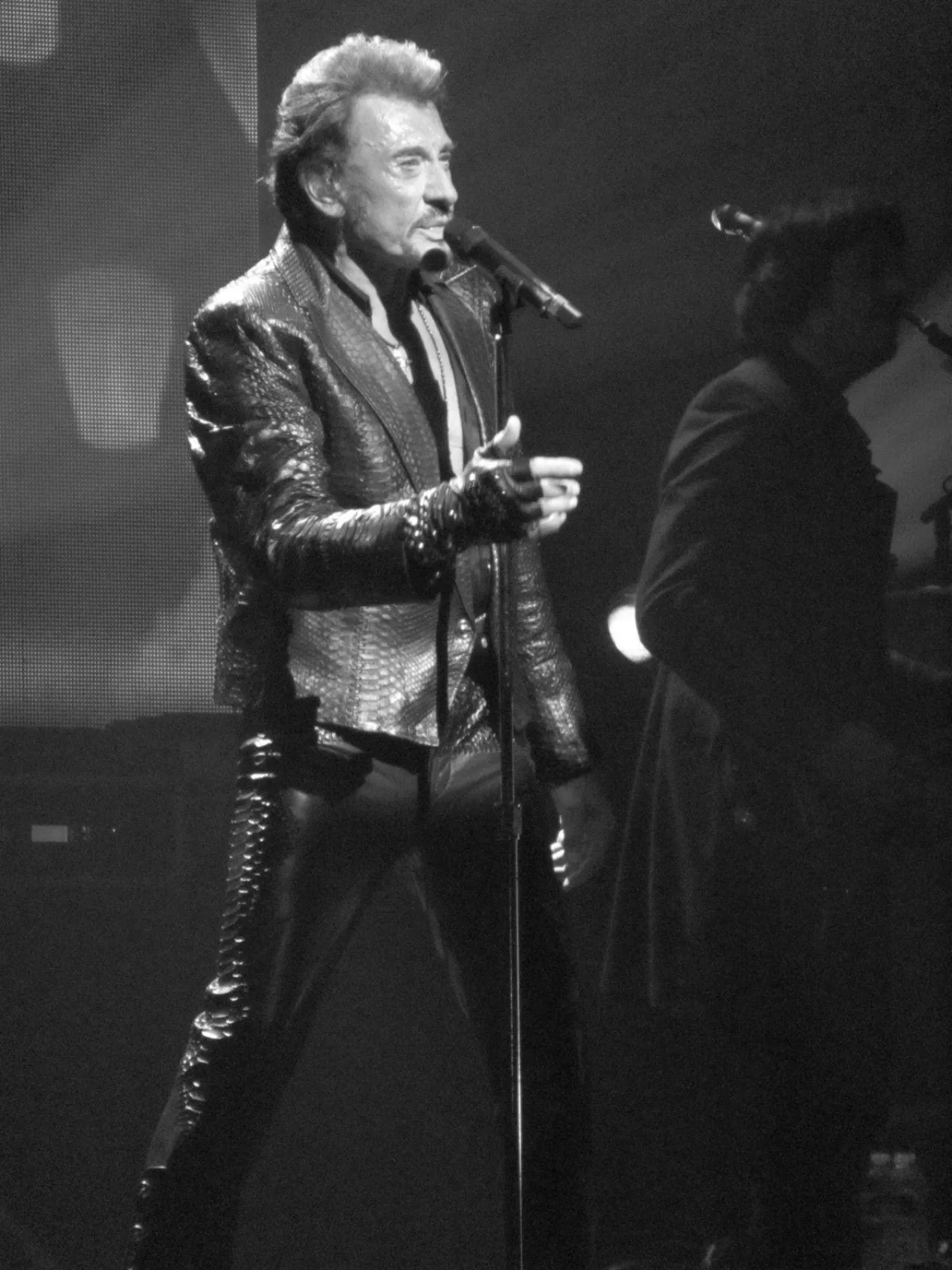
"The abdominals matter enormously for the voice. You have to sing from the diaphragm and the gut, not from the throat."
Johnny Hallyday · preparing his 2012 tour
On the day of the show, the rule changes. A half session is perfectly fine: Mylène Farmer runs with her strength coach Hervé Lewis on the very morning of her concerts. What matters is doing a session that warms you up, not one that spends the energy you will need tonight. A light cardiorespiratory wake-up with some stretching also lowers the feeling of stress through an endorphin release.
Strength training, on the other hand, is discouraged on the day of the performance and in the 48 to 72 hours before it. The aim is to avoid the muscular contractures that would interfere with the first night.
MASSAGE AND OSTEOPATHY
Not a luxury, a part of the performance
Great footballers are massaged. Singers should be too. Estelle Moltenis, who followed Adeline Toniutti through Danse avec les Stars, describes the mechanism precisely: dancing nearly eight hours a day while holding tour dates produced soreness and muscular contractions that impeded the freedom of the laryngeal suspension.
The preparation phase, the recovery and the lifestyle of a singer resemble those of an elite athlete. Quality sleep, very good hydration, gentle stretching, massage and manual therapy all contribute to preventing injury risk and optimising performance.
Marie Zheng, Qi Gong master quoted in Anatomie du Chant, adds the tissue side: massage oxygenates the fascia, promotes its elasticity, and optimises postural work and muscular training. She also sets the limit, and that is what makes her point usable: it does not replace good vocal technique.
On cold, the trade-off is real. Madonna immerses herself for ten minutes in an ice bath after every concert and calls it the best treatment for injuries. Adeline Toniutti’s caution is the one to keep: it is good for the muscles, it is not good for the throat. Weigh the soreness against the voice, and above all avoid catching cold, because without the voice you do not go on stage. And before letting anyone crack your back, one point recalled by osteopath Jean-Marie Legé: treatment outcomes are more stable after a real manipulation than after cracking, and Andrew Taylor Still, who discovered osteopathy, had stopped manipulating by cracking as early as 1911, six years before his death.
THE PHONIATRICIAN
Have your own, who knows you are leaving
Not a doctor you call in an emergency. A dedicated phoniatrician, who knows the tour is coming or that the casting is approaching, who takes a photograph and a video of the vocal folds before the performance, and who can follow the artist across the whole tour and give the necessary treatment if vocal fatigue sets in.
And a diagnostic reflex that saves careers, because it prevents treating the symptom instead of the cause.
When the vocal folds start to tire, it is almost always something else: the body is dehydrated, the vocal technique is not sharp enough, or the sound conditions are poor, typically a rushed soundcheck.
It is written in that order, and it is checked in that order.
THE SOUNDCHECK
Time spent on the settings is performance gained
Anatomie du Chant is direct on this point: some artists save themselves at the soundcheck, and pay for it during the show. Sing at full voice for a few minutes so the engineer sets real levels, and ask which good practices to follow with the microphones, the wedges or the in-ears.
In opera the acoustic changes with every house, but you often have the luck of rehearsing inside the theatre for weeks. In pop, with in-ears, that adaptation time is given to you by nobody: you have to take it.
The detail is settled track by track, and sometimes ear by ear: keeping one ear for the click, and leaving the other free for the direct sound of the piano. Those are the arbitrations you make at the soundcheck, not during the first song.
SETTING YOUR BALANCE
Sing at least once at full capacity, as you would for the performance. Check that you can hear the note, the harmony and the rhythm. Look for the balance between voices, instruments and the dynamics of the audience. Ask louder or quieter for each track, and more low, mid or high on your own return. If you want more resonance, ask for reverb, but know that it does not help intonation.
VOCAL TECHNIQUE
It is there for the nights when you are not at your best
When everything is fine, almost everyone sings well. Technique is not built for those nights. It is there for the night you arrive tired, with a cold, stressed or in a difficult hormonal moment, to let you gather yourself and take back control of your body, and put it at the service of the performance.
This is why it is built long in advance, and not during the tour. That is the whole point of the five pivot points.
Vocal technique is there to support us, above all when we are at our weakest.
REHEARSALS AND VISUALISATION
Run the whole show, several times
Not the difficult songs: the whole show, in order, several times before the real date. Chaining has to be a habit and not a discovery. Prepare a roadmap of your movements, including in relation to the lighting. If you are being filmed, get used to managing the cameras.
If you sing to a click, get used to it long in advance, in your preparatory work. On a large stage it is the rule rather than the exception.
Visualisation, finally, is done in two steps and never in one. You first imagine the worst, like a screenwriter listing every possible ending, to train your memory and your nervous system towards agility rather than freezing. Then, and this is the step everybody skips, you visualise success, through pleasant physical sensations. Adeline Toniutti advises against stopping at the first step, which produces instead an involuntary discharge of cortisol and stress.
MEMORY
It must never become the problem
On stage you are far too busy managing the unforeseen to go hunting for your lyrics. Recent memory does not hold a show, and a teleprompter is a luxury, not a plan: even a superstar who has one on the slow songs cannot lean on it.
La Bonne Voix devotes a whole chapter to the mechanisms involved. It is worth knowing what you are recruiting when you learn a stage text.
| Type of memory | Function | Duration and examples |
|---|---|---|
| Sensory memory | Briefly stores information captured by the senses. The first step of encoding. | Less than a second for sight, a few seconds for hearing. Iconic memory for images, echoic memory for sounds. |
| Short-term memory | Temporarily holds information for immediate use. | From a few seconds to a minute. Around seven items, what is called the rule of 7, like a phone number you hold just long enough to dial it. |
| Long-term memory, explicit | Episodic for personal memories situated in time and space. Semantic for language and general knowledge. | In theory unlimited. Your parents’ birthday, the name of the head of state. |
| Long-term memory, implicit | Procedural for automatisms and gestures. Perceptive, which relies on the senses and works without your knowing. | Riding a bike. Getting home out of habit on visual landmarks alone. It is also what holds faces, voices and places. |
The decisive point is elsewhere: depending on what you do with your text, you do not activate the same memories. Hence the practical question, writing or speaking.
| Action | Memories activated | Effect on learning |
|---|---|---|
| Writing | Kinaesthetic, through gesture and movement | Memorisation through the body, a brain-hand connection. |
| Speaking | Auditory and verbal | Hearing then formulating a statement in order to give it meaning. |
| Reading | Visual | Seeing the words, the structure, the layout. |
| Combining all three | Sight, movement, hearing and language | More neural connections, the information travelling through several channels. The result is a stronger and more durable memory. |
Reading silently is a passive activity, less effective for memorising. Speaking and writing are active: speaking reformulates, writing repeats. The two together consolidate best.
This is what justifies Adeline Toniutti’s method, which is anything but a whim: reciting her lyrics by heart to whoever is around, in any order, copying them out by hand, and reciting them while holding a plank at the gym. Cardio and memory in the same session, and three channels instead of one.
The more senses you engage, the more neural connections you create around the information. It is like creating several different routes to reach a memory. If stress blocks one path, there is necessarily another.
Actors say they remember a very long role because they rehearsed by associating a gesture and a look to the words. The same is true of a singer who has to respect camera positions on a television set. The more landmarks you have, and the more you associate your performance with senses, the better memory holds.
THE RITUAL SONG
Before walking on stage, Adeline Toniutti always listens to The Show Must Go On. A ritual that puts her in a condition to succeed, because it created a precedent of success: a positive conditioning that reassures the brain before the deep end. Her advice: find the music that will be your ritual music before every great moment.
SUMMARY
What has to be settled before you leave
None of these points is settled on the day of the show. They are settled weeks, sometimes months before, and that is precisely what separates a tour that holds from a tour that damages you.
One subject is deliberately missing here. Menstruation, hormonal variation and their effect on the voice deserve their own page, prepared with specialists. It is coming. In the meantime the same rule applies: vocal technique is what compensates in the weakest moments, and it has to exist before you need it.
THE BACKBONE
- 1. Hydration. Anticipated by six hours, never caught up. Half a litre at least two hours before an hour of singing.
- 2. Food. Chosen around your allergies, enough carbohydrate, tested by singing straight after. No alcohol, no smoke.
- 3. Shoes and costumes. Worn and rehearsed long before. A second pair, doubled costumes, flame-retardant if there is fire.
- 4. Hairspray. Never in a closed dressing room before singing.
- 5. Sleep. A ritual installed several days ahead. Any supplement goes through your doctor.
- 6. Training. Six months out at the very least, a year if possible. On the day, a half session that warms up. No strength training in the 48 to 72 hours before.
- 7. Massage and osteopathy. In the protocol from the start, not only when it hurts.
- 8. Your own phoniatrician. Photograph and video of the folds before the tour, follow-up during it.
- 9. Soundcheck. Sung at full voice. Time spent on the settings is performance gained.
- 10. Vocal technique. Built long in advance, for the nights when you are not at your best.
- 11. Whole show and visualisation. Chained several times, visualised through to success and not only to the worst.
- 12. Memory. Learned through several channels: written, spoken, recited out of order. Several routes to the same memory.
This page is a general framework. In case of vocal fold pathology, the opinion of an ENT specialist or a phoniatrician comes before any preparation programme.
CALYP
Prepare a tour with CALYP
The method is in Anatomie du Chant (Marabout, 2024). To build your protocol with the team: book an appointment.
Frequently asked questions
How long before a concert should you drink?
Digesting water takes about six hours. For an hour of singing, count half a litre at least two hours before. Adeline Toniutti drinks two litres before 2pm for an 8pm show.
What should you eat before singing?
There is no universal answer. Choose a meal around your allergies, with enough carbohydrate to hold the show, and test it by singing straight after to check that digestion does not slow you down. Avoid alcohol and smoke, which alter the mucous membranes.
Can you wear new heels on the day of the concert?
No. A heel changes the curve of the spine and therefore the muscular support available for singing. The performance heel is worn long before, and moving from heels to flats also requires an adaptation.
Is hairspray dangerous for the voice?
Sprayed in a closed dressing room shortly before singing, it can seriously irritate the vocal folds. Spray elsewhere or with the door open, and let the air renew itself.
Should you train on the day of the concert?
A half session, yes. Mylène Farmer runs with her strength coach Hervé Lewis on the very morning of her concerts. The aim is to warm up, not to spend the evening’s energy. Strength training, however, is discouraged on the day of the performance and in the 48 to 72 hours before it, to avoid contractures.
Are ice baths good for a singer?
It is a trade-off. Madonna takes ten minutes of it after every concert for her soreness. But cold is not good for the throat. Weigh the soreness against the voice, and above all avoid catching cold.
What should you do when the voice starts to tire on tour?
Look for the cause before the symptom. In almost every case it is dehydration, insufficient vocal technique, or poor sound conditions, typically a rushed soundcheck. Your own phoniatrician, who saw your folds before departure, makes that call quickly.
How do you learn your text for the stage?
By going through several channels. Writing activates kinaesthetic memory, speaking activates auditory and verbal memory, reading activates visual memory. Combining them creates more neural connections, therefore several routes to the same memory: if stress blocks one, others remain. Adeline Toniutti recites her lyrics out of order, copies them out, and recites them while holding a plank at the gym.
Is reading your text silently enough?
No. Reading silently is a passive activity, less effective for memorising. Speaking and writing are active: speaking reformulates, writing repeats. The two together consolidate memory best.