如何不让嗓子疲劳
嗓音诊所
喉咙不必买单。腹肌酸是正常的。声带累,说明动作不对。
A HEALTHY GESTURE
喉咙不必买单
Singing remains physical work. After a session the abdominals may be tired. That is normal.
声带不行。
Adeline Toniutti 区分两种疲劳。周边肌肉(腹带、肋骨、背)在纠正动作时可以酸。声带不该累。在《Anatomie du Chant》里,健康动作有三个同等条件:
- 1.声音能经得住专业乐手的检验。
- 2.要多少次就能做多少次。
- 3.唱完声音仍柔软。声带不累。只有正常的身体疲劳。
Physical comfort has a precise meaning here: at the end of the session, no discomfort and no pain in the throat.
THE GESTURE
真正让嗓子累的东西
You can make a sound that “passes” with a bad gesture. The audience does not always hear the difference at once. Adeline calls that singing the wrong way up, or having the voice the wrong way up.
The bad gesture, repeated, with fatigue coming back, can lead to dysfunctional lesions. They appear later. The consequences for the folds are more serious.
不是音量在磨损。是喉在替腹带干活,舌头卡住,吸气太大,下巴松得像打哈欠,姿势被忘掉。
腹带不工作。 The lungs have no motor muscle of their own. Without transversus, obliques and rectus, exhalation is no longer measured. The sound runs out of air, or is forced. The larynx compensates. It is the one that pays.
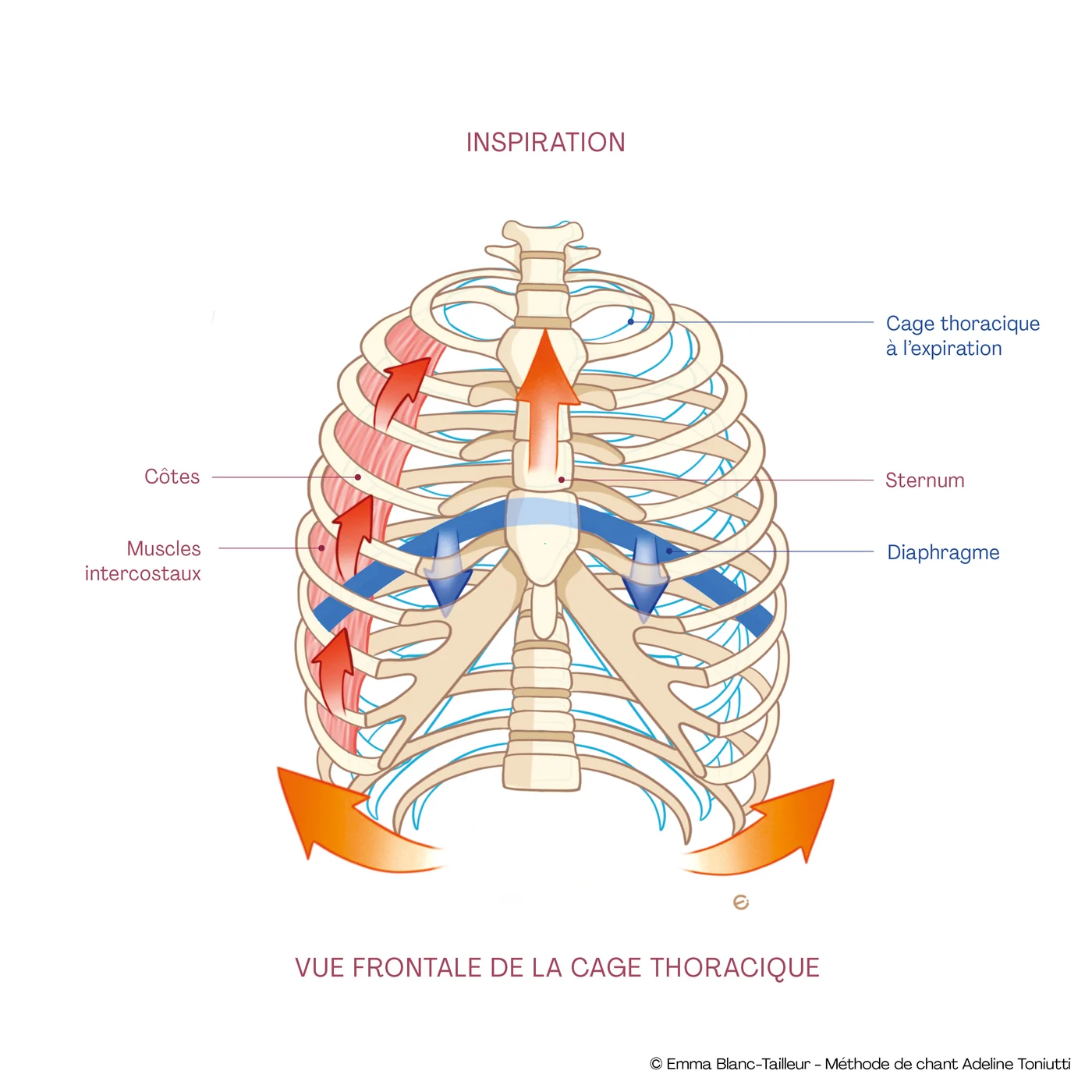
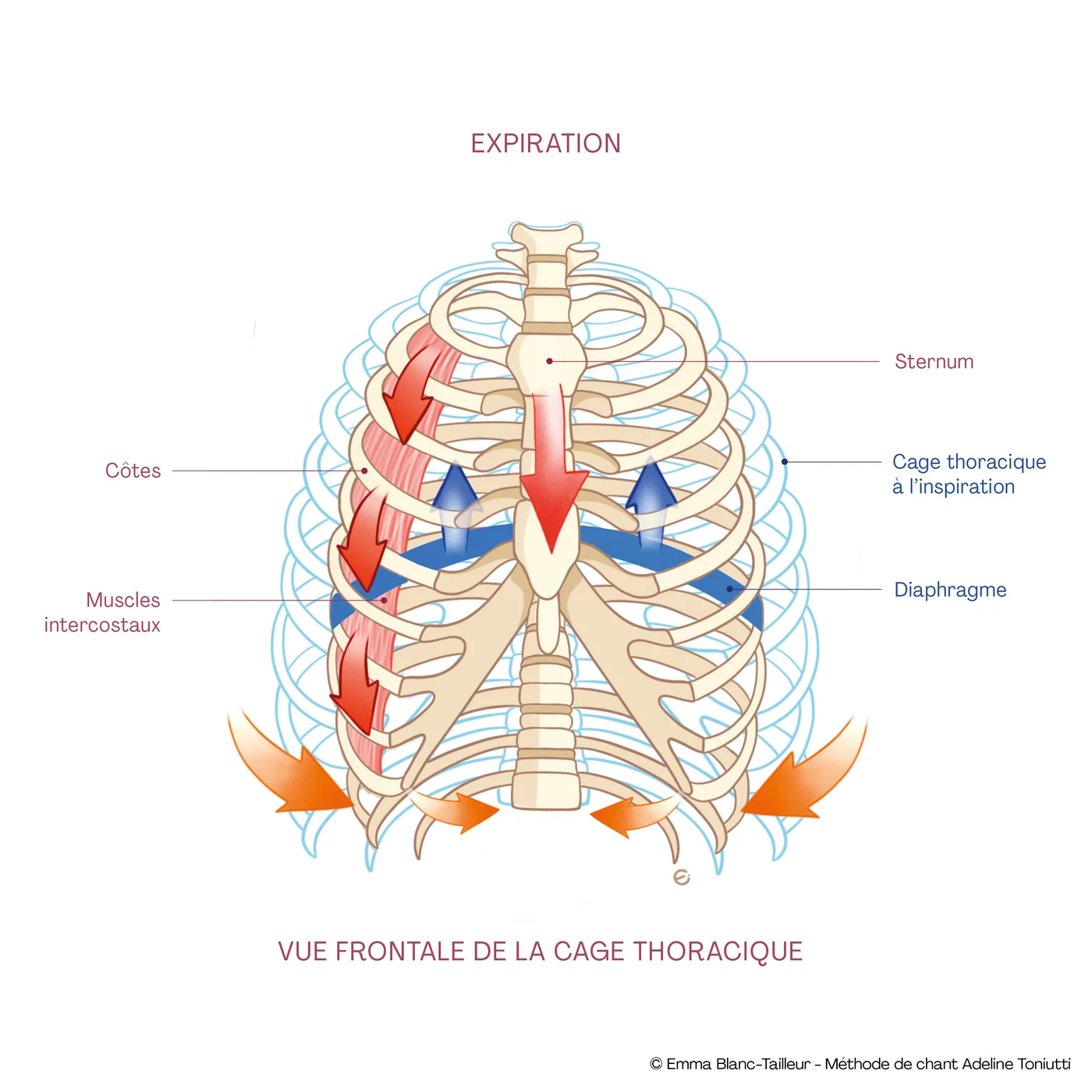
插图 © Emma Blanc-Tailleur,《Anatomie du Chant》,Adeline Toniutti
Ribs locked on the inhale. The diaphragm can no longer descend freely. Useful volume drops, the phrase stiffens, you push to finish.
喉被往下按。 喉跟着呼出的气往上走,也不锁在上面。它是吊床,不是往下推的抽屉。
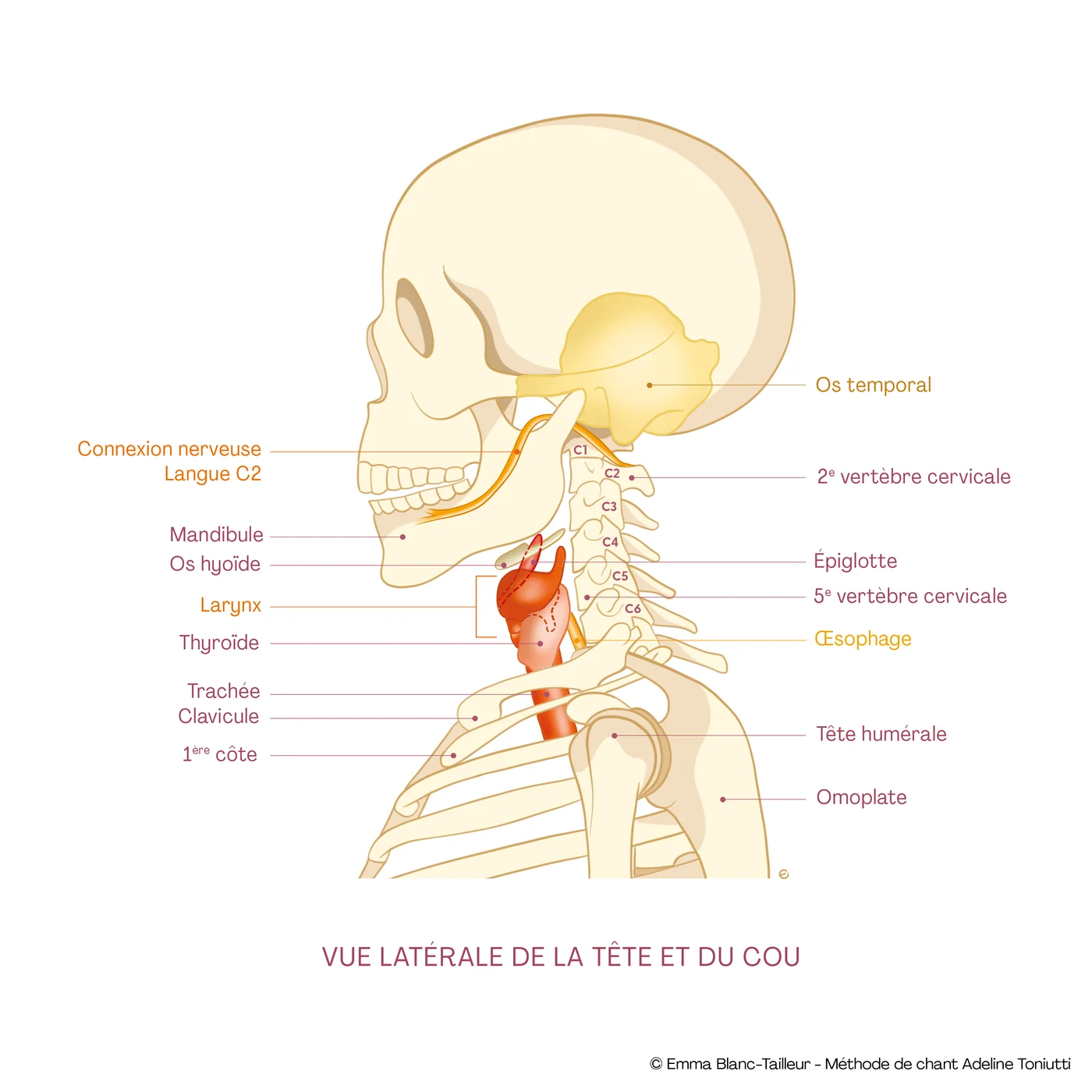
插图 © Emma Blanc-Tailleur,《Anatomie du Chant》,Adeline Toniutti
The tongue falling onto the mandible. Thumbs behind the bone, in the space between larynx and jaw: if the tongue comes to meet the fingers and locks, the movement is wrong. If it moves away, toward the soft palate, without sticking to it, the gesture is the right one.
A mandible that is too slack. Opening is not yawning. A soft jaw releases the anterior chain, reduces the soft palate, disturbs laryngeal suspension, and articulation becomes a caricature that hurts the throat.
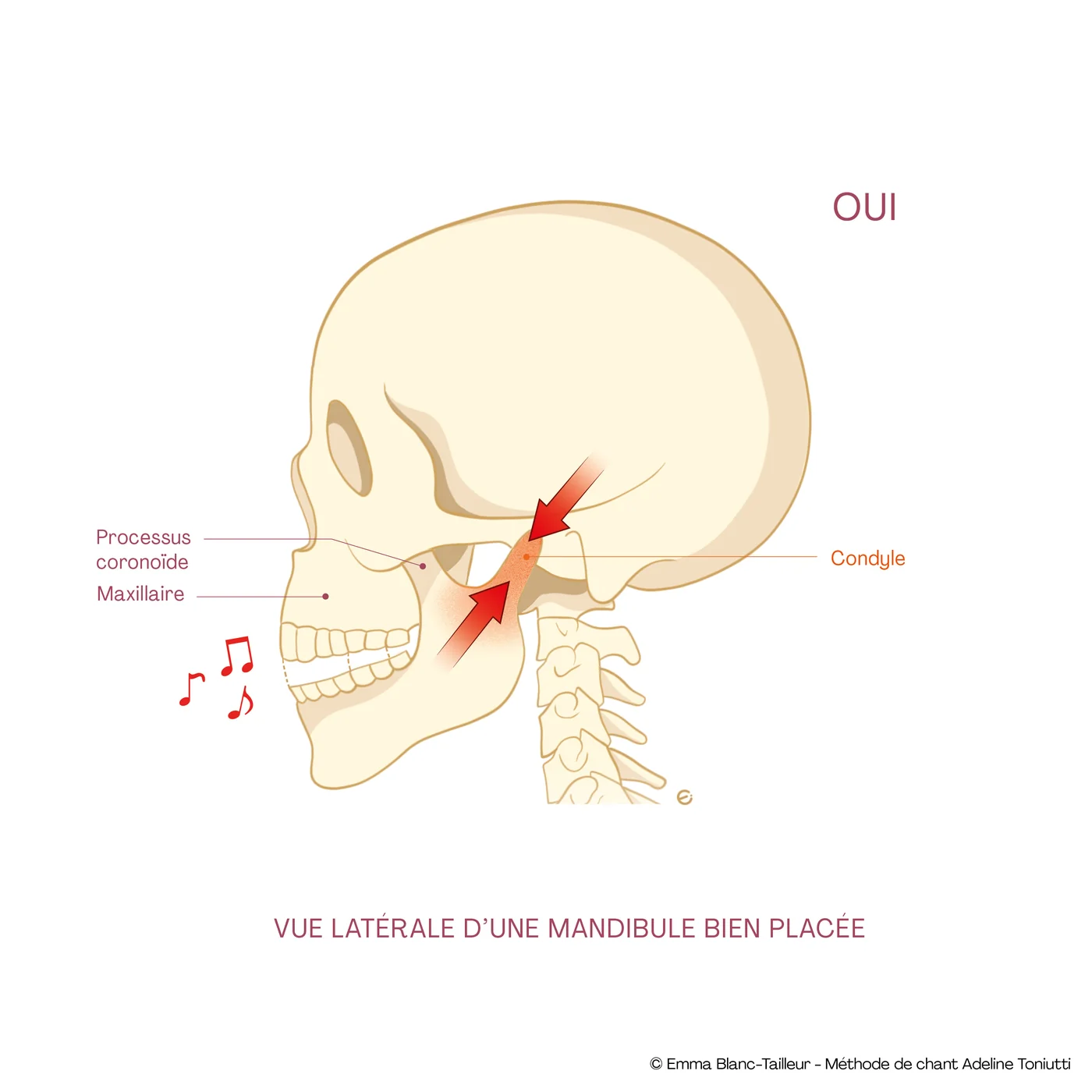
插图 © Emma Blanc-Tailleur,《Anatomie du Chant》,Adeline Toniutti
Singing on the inhale. You can make a sound while inhaling. It is not aesthetic. It is exhausting.
大口吸气,所谓「嗓音珠穆朗玛」。 Adeline 看到的相反:吸得很小,两次,很快,像闻一朵花,更快找到正确动作。
Releasing the ribs on the note. On a high note, most people let the floating ribs open again. The required pressure disappears. The larynx is left alone.
Forgotten posture. Neck, shoulders, pelvis: the first thing you drop, too busy with the notes or the stress. It is also the first thing that degrades the gesture. Osteopath Jean-Marie Legé: when the atlas slides sideways, the patient’s voice is veiled and fatiguable.
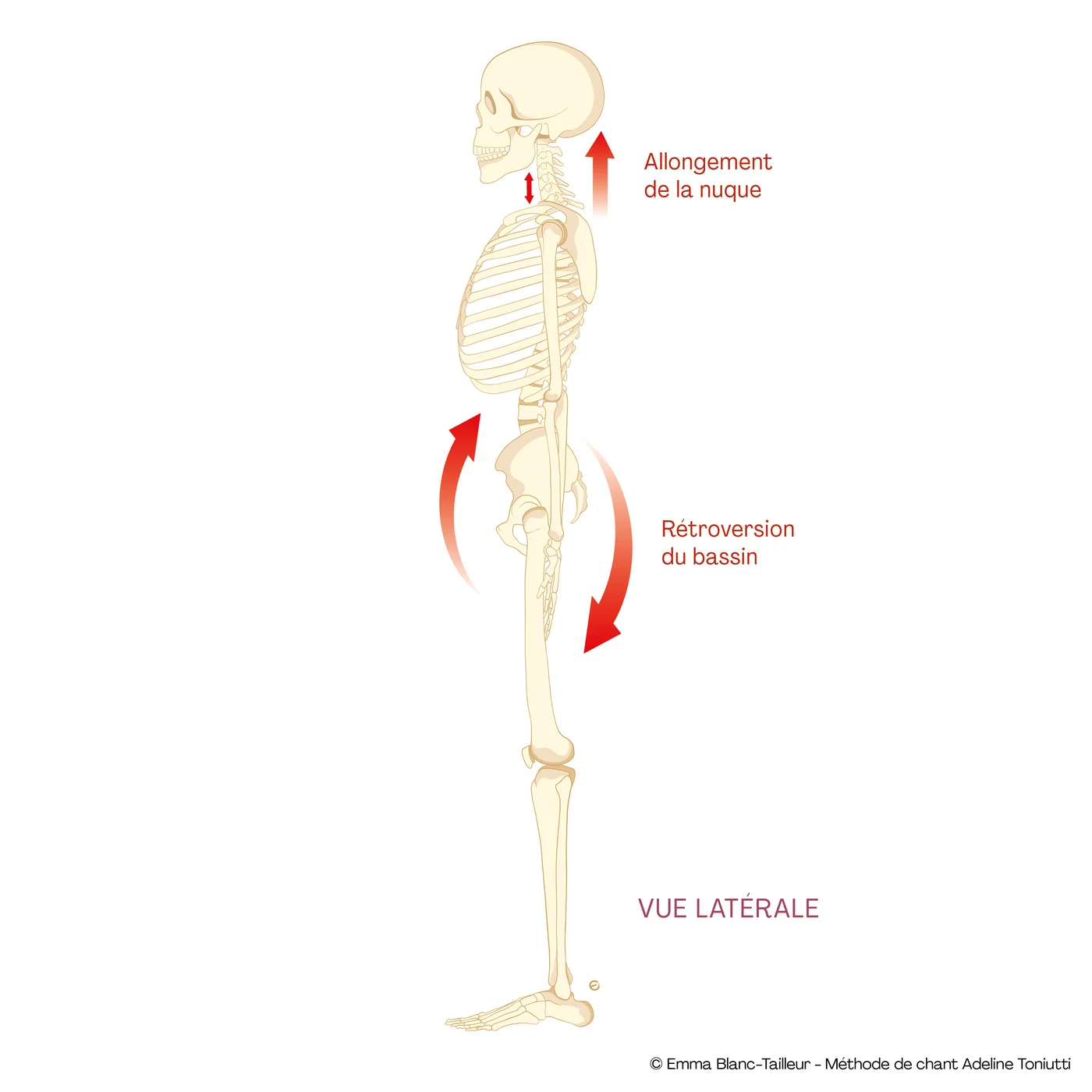
插图 © Emma Blanc-Tailleur,《Anatomie du Chant》,Adeline Toniutti
IN THE LESSON
喉咙一说话就停
喉咙痛,或出现不适,立刻说。让人痛的练习不要接着做。
It is the coach’s responsibility to check that the technique respects the instrument. It is the student’s duty to report. A lesson sung with a sore throat throughout can cause a lesion within 24 hours.
课后 24 小时声音仍不正常,说明课上出了问题。若有损伤,至少 48 到 72 小时禁声,不好转就看耳鼻喉。
Signs to take seriously (this is then dysphonia): the voice carries less; the range shrinks; the timbre changes; speaking or singing becomes hard, the folds vibrate poorly.
Lifestyle, drinking ahead of effort, recovery after the stage: that already lives on the Voice Care page. This page is the gesture.
DOSE
一个能重复的动作
The method does not give an hour quota. It gives a criterion: the gesture must be repeatable.
A high note is healthy when you can approach it every way: from below, staccato, legato, in every dynamic, in every register. If you can only do it by forcing once, it is not a high note yet. It is an accident.
The same for a forte. If the sound only holds because you pushed, you will not be able to ask for it again tomorrow. On stage, plan recovery. The stage is demanding.
Hydration is anticipated. Jean-Marie Legé: water takes six hours to be used. The detail is on 保护嗓子.
“如果我是[席琳·迪翁]的声乐教练,我也会建议她这么做,这是一个明智的选择。[……] 考虑到她的病情,降低调性、让她撑完整场演出,远比在一首歌里倾尽全力、最后精疲力竭要合理得多。”
WHAT YOU FEEL
对的时候
You feel air leaving through the mouth, and a tiny mist through the nose, whatever the vowel. A finger under the nose checks it.
不要在自己脑袋里用力听自己。镫骨肌反射保护内耳。
The larynx stays mobile. The sternal notch stays free. The base of the tongue goes toward the soft palate, without sticking to it (otherwise the sound becomes entirely nasal).
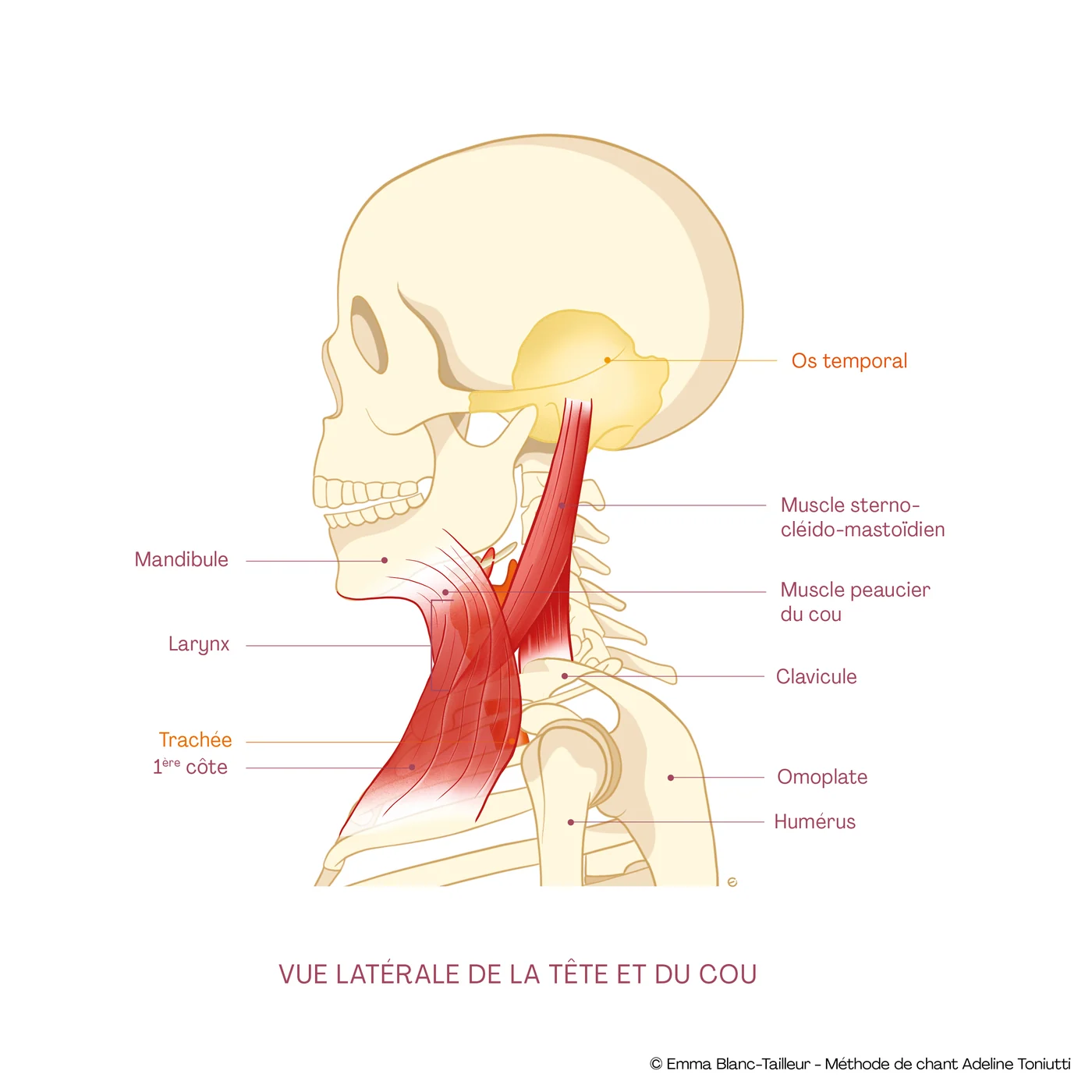
插图 © Emma Blanc-Tailleur,《Anatomie du Chant》,Adeline Toniutti
IN PRACTICE
三项检查
1. Stop as soon as the throat speaks
Discomfort means you change a parameter. You do not push through.
2. Check who is working
Hands on the floating ribs, inhale as if smelling a flower. On the exhale the ribs draw together, the obliques hold. If only the neck hardens, that is not singing: it is compensation.
3. Thumbs under the mandible
The tongue moves away from the fingers. It does not rest on them. You should be able to sing like that without discomfort.
这三项都要遵守五个支点。声带病变:先看专科。
常见问题
唱完喉咙痛正常吗?
不正常。腹肌可以酸。声带不行。喉咙不适或疼痛,说明动作的某个参数必须改。
什么叫「反着唱」?
用错误动作做出听起来还过得去的声音。反复做会累声带,以后可能留下损伤。
课后声音不正常要休息多久?
课后 24 小时仍不正常,说明课上出了问题。若有损伤,至少 48 到 72 小时禁声,不好转就看耳鼻喉。
是音量让嗓子累吗?
不是。是喉在替腹带干活、肋骨松开、舌头卡住、吸气太大,或姿势被忘掉。