Como não cansar a voz
CLÍNICA DA VOZ
A garganta não tem de pagar. Cansaço dos abdominais: normal. Cansaço das pregas: o gesto não era saudável.
A HEALTHY GESTURE
A garganta não tem de pagar
Singing remains physical work. After a session the abdominals may be tired. That is normal.
As pregas vocais, não.
Adeline Toniutti distingue duas fadigas. A dos músculos periféricos pode aparecer ao corrigir um gesto. A das pregas não deve chegar. Em Anatomie du Chant, um gesto saudável tem três condições do mesmo peso:
- 1.O som aguenta diante de profissionais da música.
- 2.Pode repetir-se tantas vezes quantas forem pedidas.
- 3.Depois, o som continua flexível. Nenhuma fadiga das pregas. Só o cansaço físico normal.
Physical comfort has a precise meaning here: at the end of the session, no discomfort and no pain in the throat.
THE GESTURE
O que cansa de verdade
You can make a sound that “passes” with a bad gesture. The audience does not always hear the difference at once. Adeline calls that singing the wrong way up, or having the voice the wrong way up.
The bad gesture, repeated, with fatigue coming back, can lead to dysfunctional lesions. They appear later. The consequences for the folds are more serious.
Não é o volume que desgasta. É uma laringe que trabalha no lugar da cinta, uma língua que bloqueia, uma inspiração grande demais, uma mandíbula mole, uma postura esquecida.
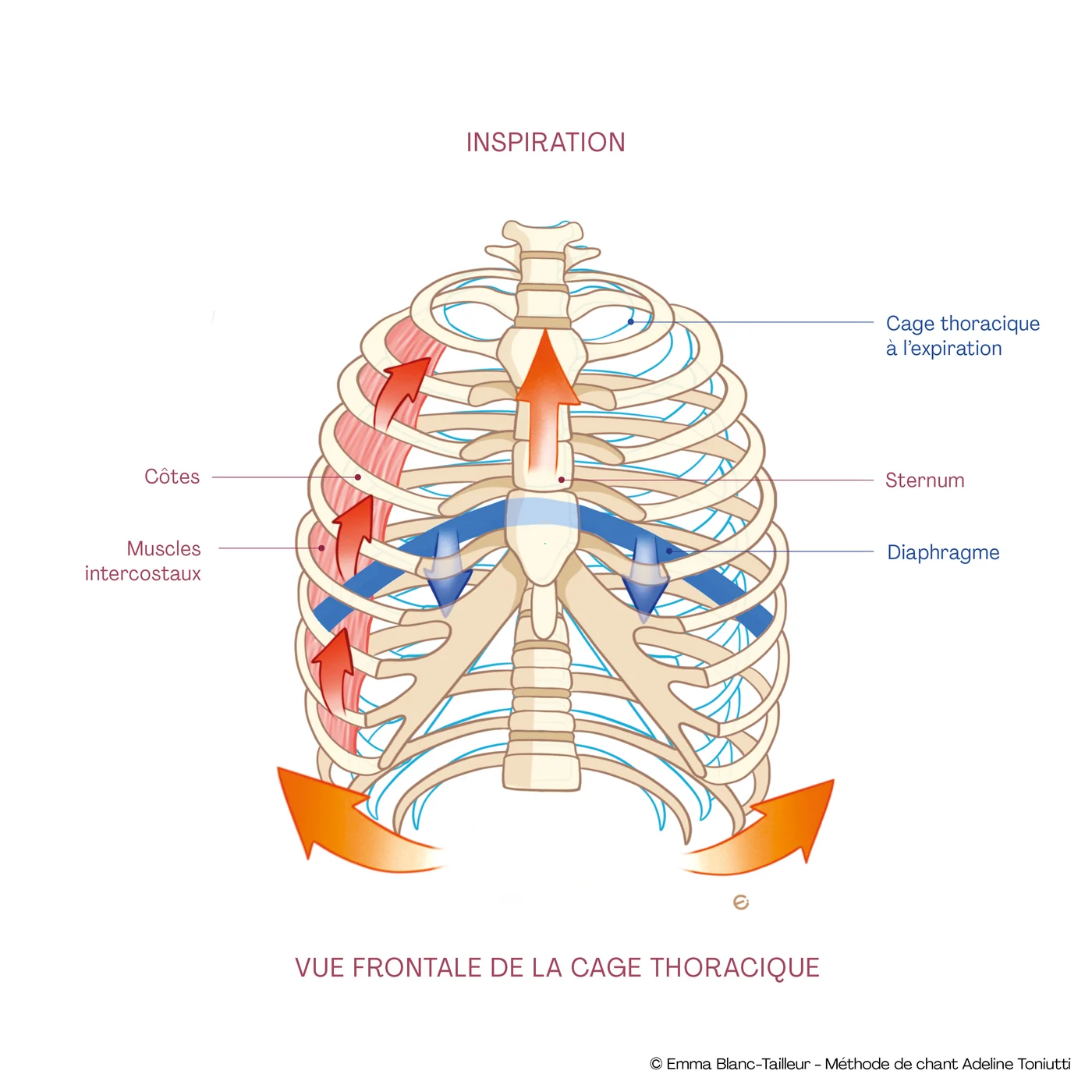
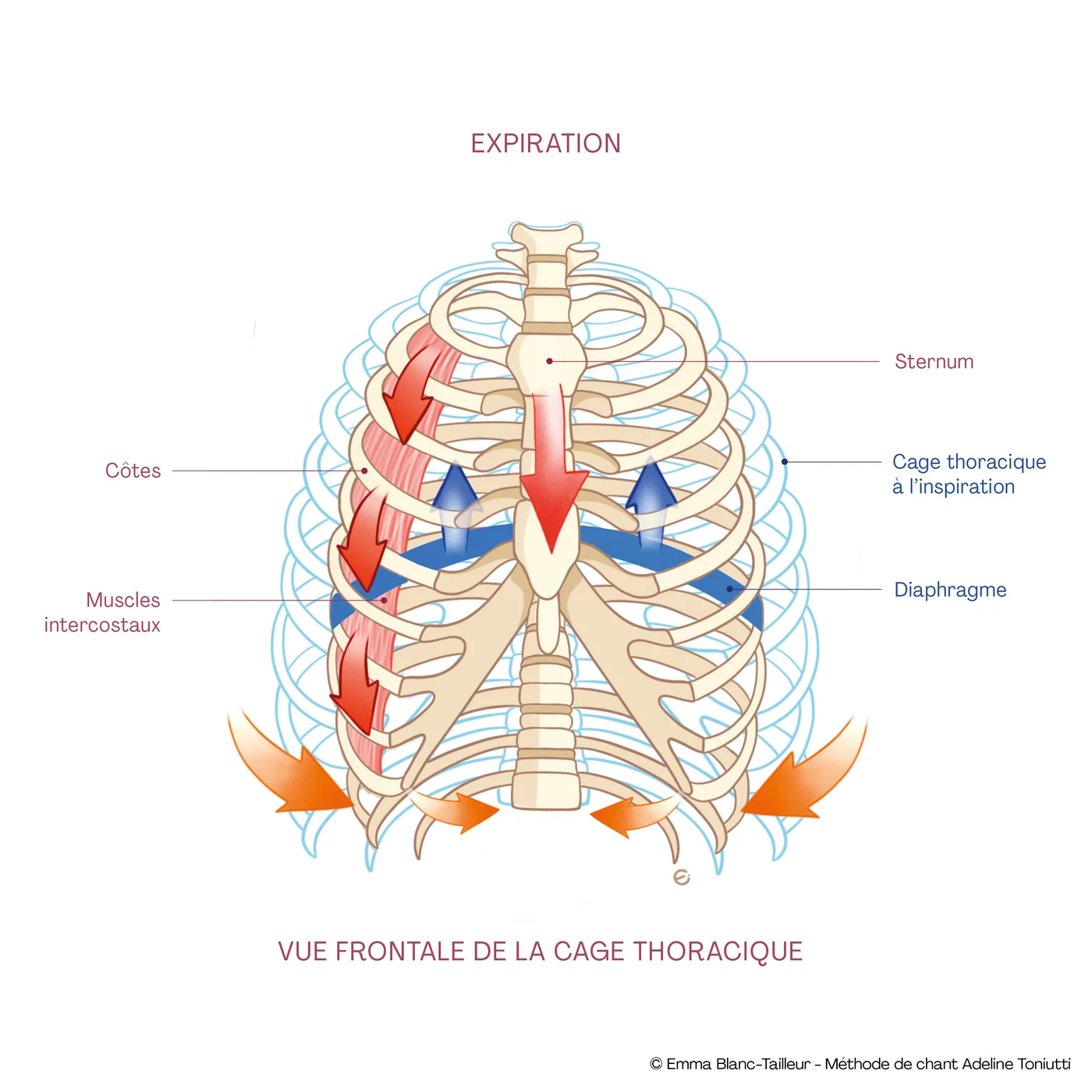
A cinta inativa. The lungs have no motor muscle of their own. Without transversus, obliques and rectus, exhalation is no longer measured. The sound runs out of air, or is forced. The larynx compensates. It is the one that pays.
Ilustrações © Emma Blanc-Tailleur, Anatomie du Chant, Adeline Toniutti
Ribs locked on the inhale. The diaphragm can no longer descend freely. Useful volume drops, the phrase stiffens, you push to finish.
A laringe travada para baixo. A laringe segue o ar expirado, para cima, sem bloquear em cima. É uma rede, não uma gaveta.
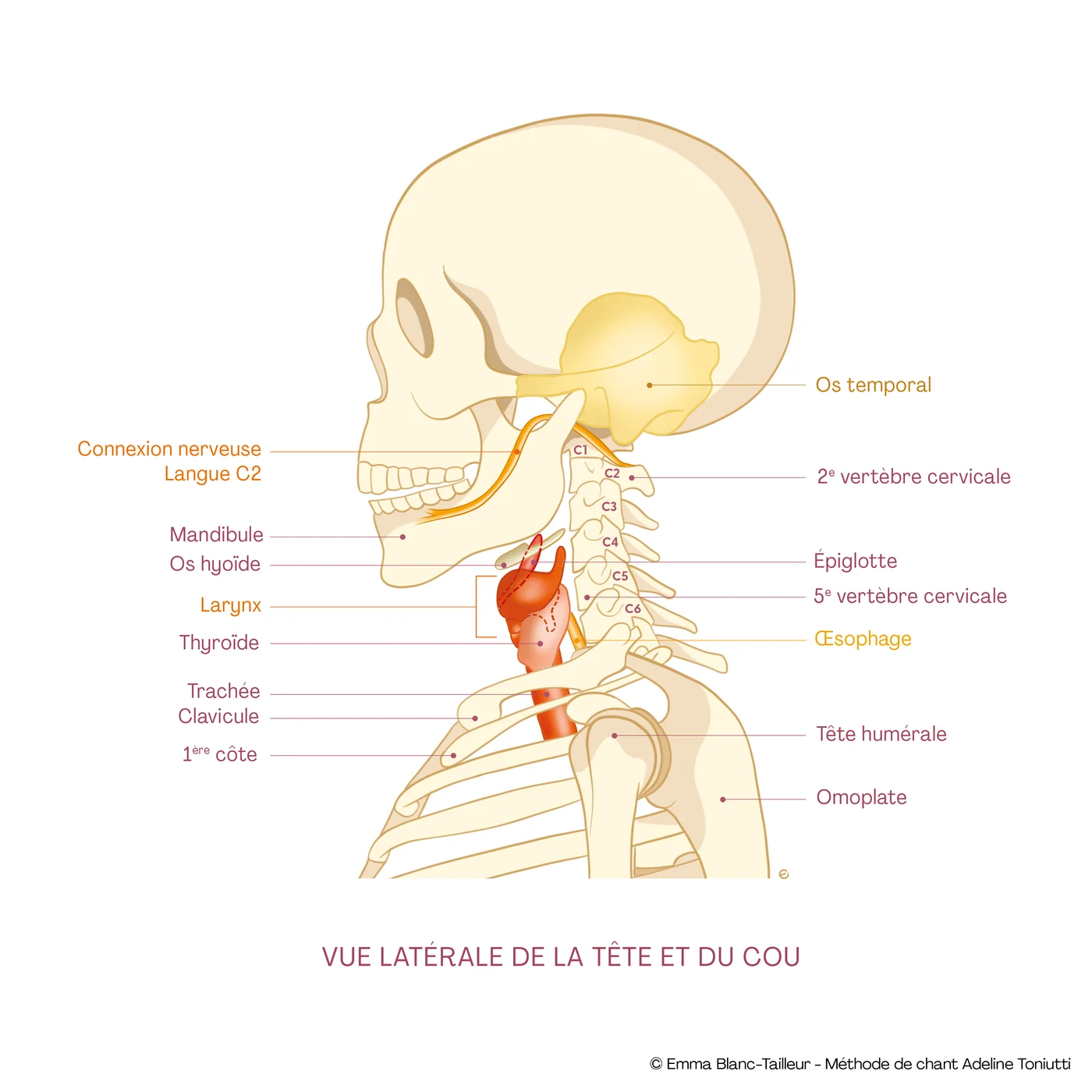
Ilustração © Emma Blanc-Tailleur, Anatomie du Chant, Adeline Toniutti
The tongue falling onto the mandible. Thumbs behind the bone, in the space between larynx and jaw: if the tongue comes to meet the fingers and locks, the movement is wrong. If it moves away, toward the soft palate, without sticking to it, the gesture is the right one.
A mandible that is too slack. Opening is not yawning. A soft jaw releases the anterior chain, reduces the soft palate, disturbs laryngeal suspension, and articulation becomes a caricature that hurts the throat.
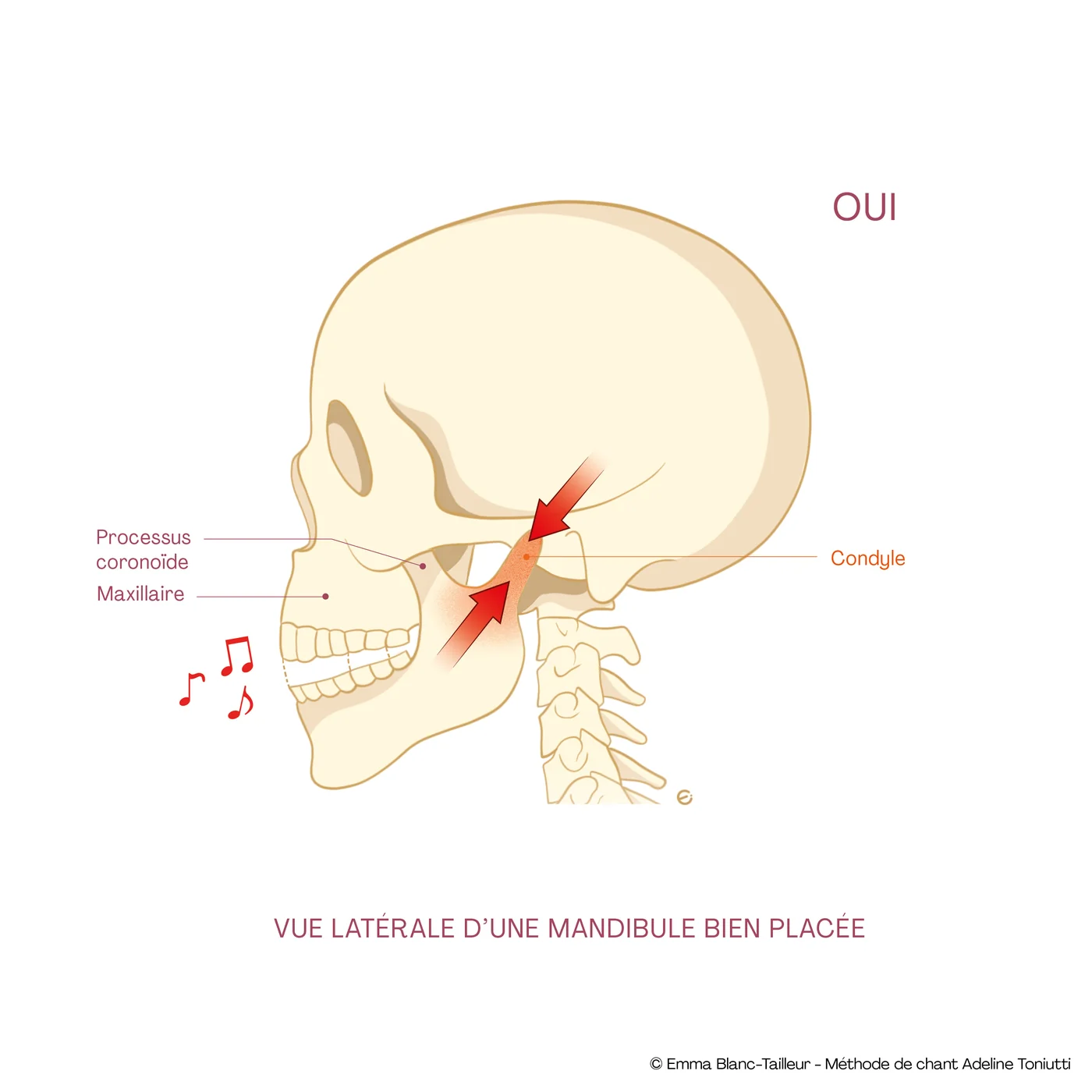
Ilustração © Emma Blanc-Tailleur, Anatomie du Chant, Adeline Toniutti
Singing on the inhale. You can make a sound while inhaling. It is not aesthetic. It is exhausting.
A grande tomada de ar, o «Everest vocal». Adeline viu o contrário: inspirar muito pequeno, duas vezes, bem rápido, como para cheirar uma flor, encontra antes o movimento certo.
Releasing the ribs on the note. On a high note, most people let the floating ribs open again. The required pressure disappears. The larynx is left alone.
Forgotten posture. Neck, shoulders, pelvis: the first thing you drop, too busy with the notes or the stress. It is also the first thing that degrades the gesture. Osteopath Jean-Marie Legé: when the atlas slides sideways, the patient’s voice is veiled and fatiguable.
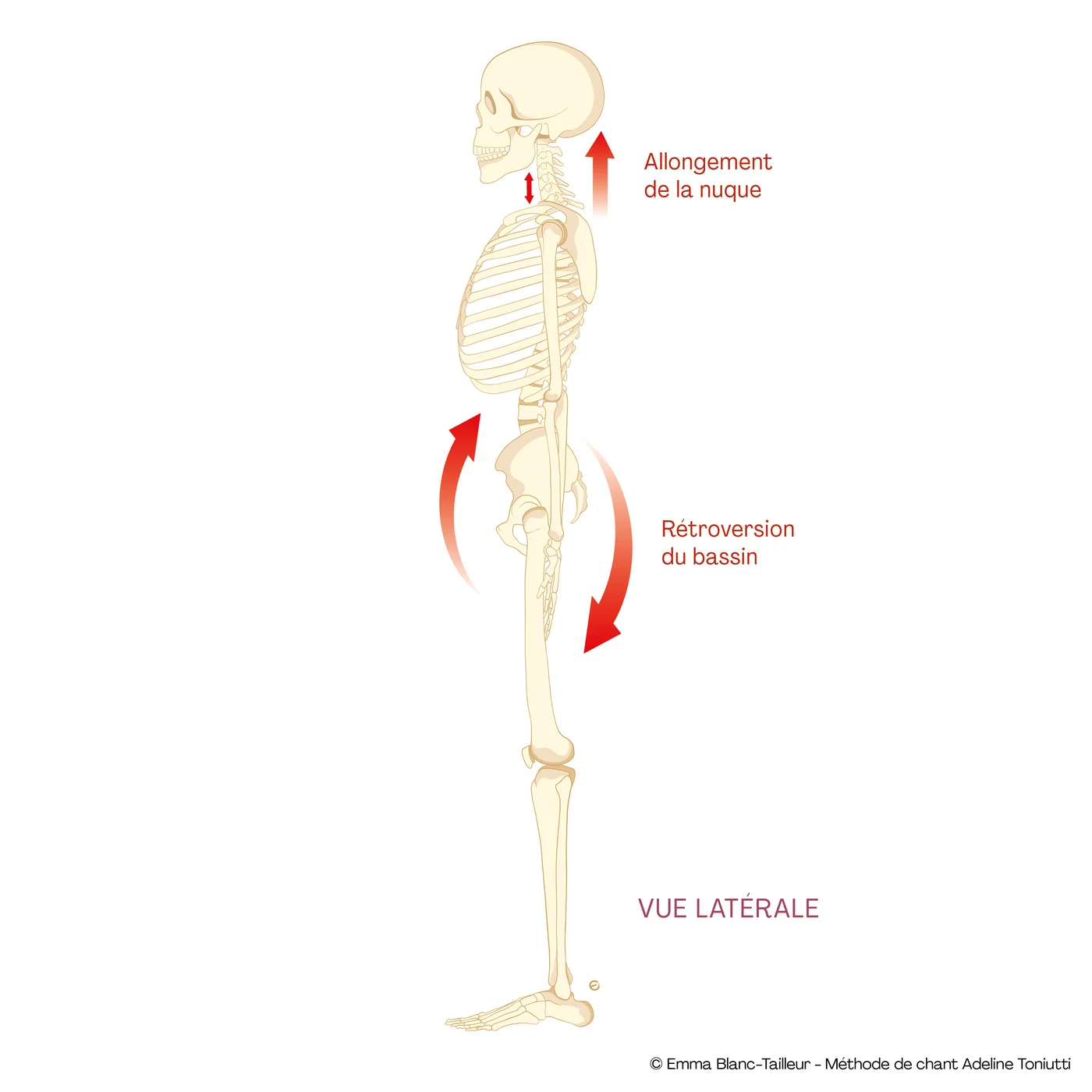
Ilustração © Emma Blanc-Tailleur, Anatomie du Chant, Adeline Toniutti
IN THE LESSON
Parar assim que a garganta fala
Se a garganta dói, ou aparece um desconforto, diz-se já. Não se continua um exercício que dói.
It is the coach’s responsibility to check that the technique respects the instrument. It is the student’s duty to report. A lesson sung with a sore throat throughout can cause a lesion within 24 hours.
Se a voz continua anormal 24 horas depois da aula, houve um problema. Com lesão, 48 a 72 horas de repouso vocal no mínimo, depois um ORL se não voltar.
Signs to take seriously (this is then dysphonia): the voice carries less; the range shrinks; the timbre changes; speaking or singing becomes hard, the folds vibrate poorly.
Lifestyle, drinking ahead of effort, recovery after the stage: that already lives on the Voice Care page. This page is the gesture.
DOSE
Um gesto que se pode repetir
The method does not give an hour quota. It gives a criterion: the gesture must be repeatable.
A high note is healthy when you can approach it every way: from below, staccato, legato, in every dynamic, in every register. If you can only do it by forcing once, it is not a high note yet. It is an accident.
The same for a forte. If the sound only holds because you pushed, you will not be able to ask for it again tomorrow. On stage, plan recovery. The stage is demanding.
Hydration is anticipated. Jean-Marie Legé: water takes six hours to be used. The detail is on Cuidar da voz.
«Se eu fosse a coach vocal [da Céline Dion], teria dito a ela para fazer a mesma coisa, é uma escolha inteligente. […] Com a doença dela, é muito mais razoável baixar o tom para que ela aguente o show inteiro, em vez de dar tudo em uma música e terminar completamente esgotada.»
WHAT YOU FEEL
Quando está certo
You feel air leaving through the mouth, and a tiny mist through the nose, whatever the vowel. A finger under the nose checks it.
Não se procura ouvir-se forte na própria cabeça. O reflexo estapédio protege o ouvido interno.
The larynx stays mobile. The sternal notch stays free. The base of the tongue goes toward the soft palate, without sticking to it (otherwise the sound becomes entirely nasal).
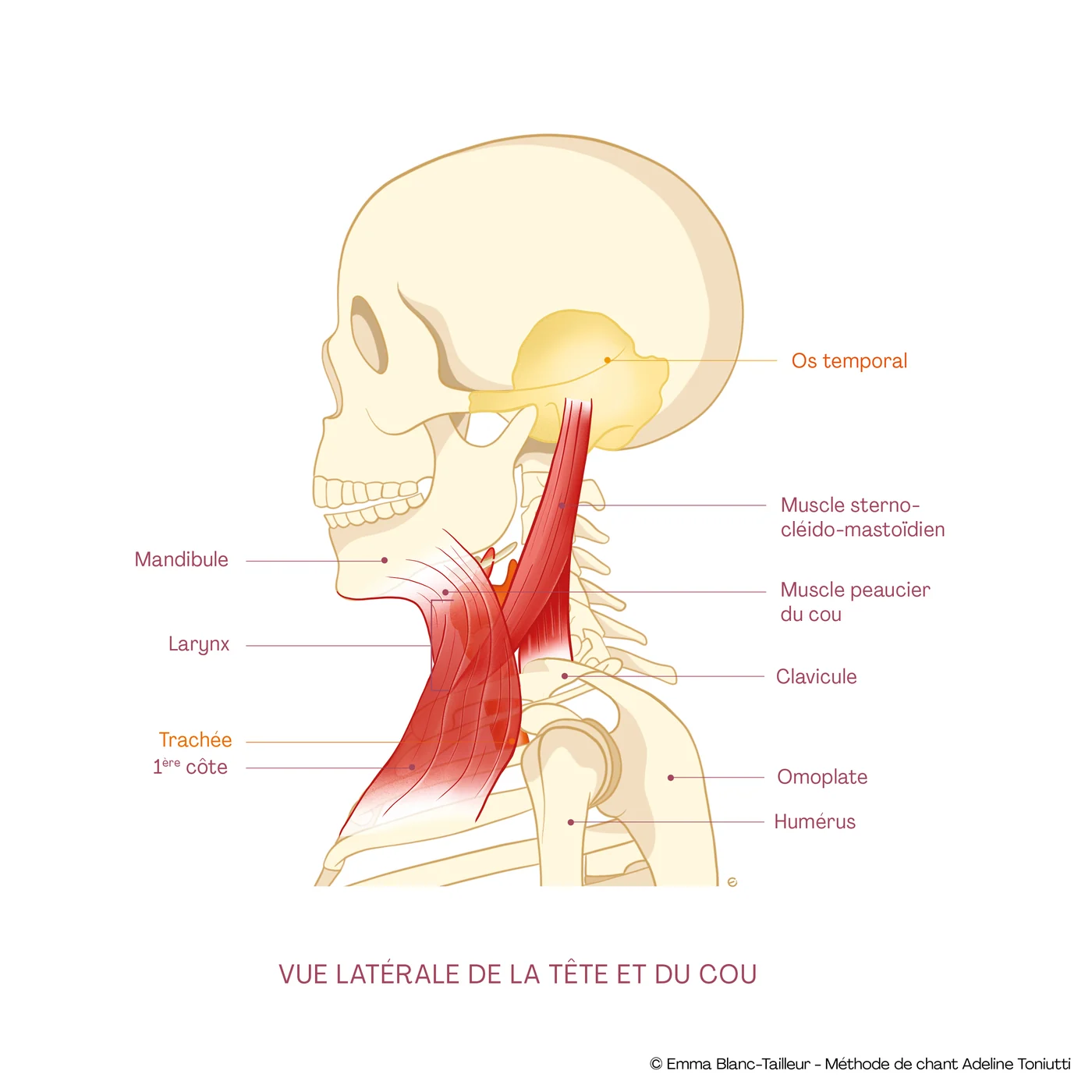
Ilustração © Emma Blanc-Tailleur, Anatomie du Chant, Adeline Toniutti
IN PRACTICE
Três verificações
1. Stop as soon as the throat speaks
Discomfort means you change a parameter. You do not push through.
2. Check who is working
Hands on the floating ribs, inhale as if smelling a flower. On the exhale the ribs draw together, the obliques hold. If only the neck hardens, that is not singing: it is compensation.
3. Thumbs under the mandible
The tongue moves away from the fingers. It does not rest on them. You should be able to sing like that without discomfort.
Estes três gestos fazem-se respeitando os cinco pontos pivô. Patologia nas pregas: primeiro o especialista.
CALYP
Trabalhar o gesto no CALYP
O método está em Anatomie du Chant (Marabout, 2024). Para o trabalhar com a equipa: marque uma consulta.
Perguntas frequentes
É normal a garganta doer depois de cantar?
Não. Os abdominais podem estar cansados. As pregas, não. Um desconforto ou uma dor de garganta significa que um parâmetro do gesto deve mudar.
O que é cantar ao contrário?
Produzir um som que pode parecer correto com um mau gesto. Repetido, cansa as pregas e pode provocar lesões mais tarde.
Quanto tempo descansar se a voz estiver anormal depois de uma aula?
Se a voz continuar anormal 24 horas depois, houve um problema. Com lesão, 48 a 72 horas de repouso vocal, depois um ORL se não voltar.
É o volume que cansa a voz?
Não. É a laringe a trabalhar no lugar da cinta, as costelas soltas, a língua bloqueada, uma inspiração grande demais ou uma postura esquecida.