Modi di cantare il francese
CLINICA DELLA VOCE
Retrò, americano-quebecchese, urbano, french variety. Quattro famiglie per lo studio.
IN THE STUDIO
Non si sa più bene come dirlo
The language has changed. The codes for singing it have changed too. When an artist arrives in the studio, it is hard to guide them on what will suit their vocal style. It has not been formalised.
Adeline Toniutti takes this from a conversation with her manager. In Anatomie du Chant she groups these ways into four families. That is the point: not “articulate French”, but choose how you sing it.
The five pivot points remain the same instrument. The family is the colour you ask for.
RETRO
Lo stile retrò
Si rollano le «r», alla Édith Piaf. Si tagliano le parole perché viva il silenzio. Le vocali sono pure. Il vibrato è assunto.
Barbara Pravi and Zaho de Sagazan have taken up some of these codes, the rolled “r” in particular. Chimène Badi covers Piaf with her soul style, and the vibrato stays owned. It is not “doing old”. It is a French that lets silence work, that does not swallow the vowels, that is not afraid of an “r” you can hear.
AMERICAN-STYLE
Lo stile americano-quebecchese
È quello che Adeline chiama anche, in sala e in tv, «cantare all’americana».
Big-voiced singers take on anglophone ways. A more nasal placement. Syllables are cut like an American diphthong. Céline Dion, Natasha St-Pier.
Il twang, insegnato a partire dai cinque punti cardine, si chiama da lei «cantare all’americana». Céline Dion e Diane Dufresne lo mettono in francese.
The palate stays raised. This is not nasalising to “do Céline”. Nasalising the sound, palate down, larynx dropping: that is the counterfeit of twang, and it puts the folds at risk. To find the flow of that French, Adeline sometimes has people sing a French song in English “yaourt”, onomatopoeia, until the line runs. At the Star Academy château, Claudia Tagbo’s yaourt with Michèle Laroque made the whole room laugh. The exercise is there to find that cutting of syllables.
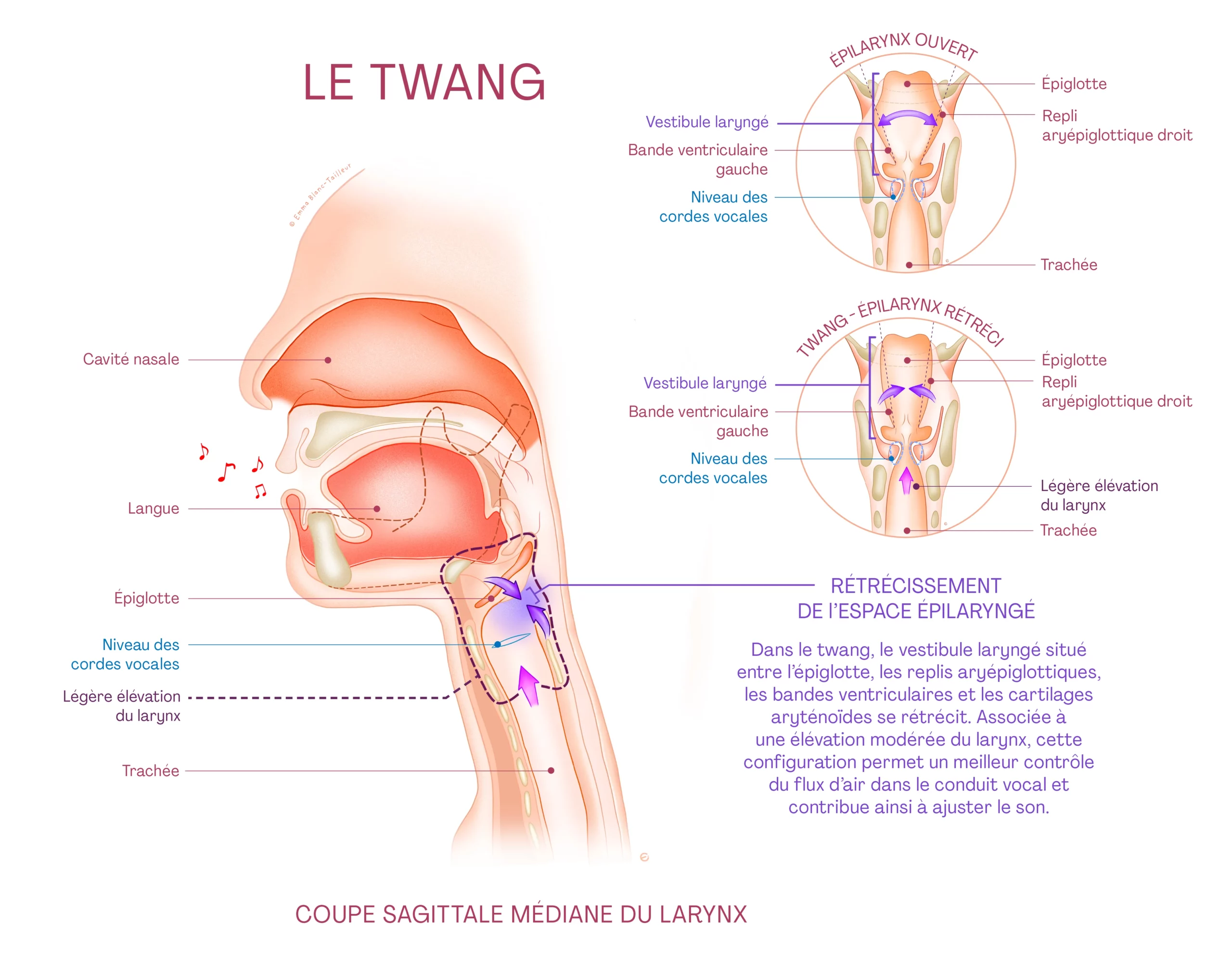
Illustrazione © Emma Blanc-Tailleur, Anatomie du Chant, Adeline Toniutti
URBAN
Lo stile urbano
Some sounds, in the way of pronouncing or linking, come from rap or the urban.
Vitaa: an urban musicality, and a purity of timbre that is hers. Yseult, Angèle: they personalise the vowels according to the emotion. Here French is not “less sung”. It is linked differently. The vowels move with what you feel, not only with the written vowel.
FRENCH VARIETY
Lo stile french variety
Vocali pure. Vibrato assente o discreto. Vicino al naturale del testo. Mylène Farmer, Françoise Hardy.
No rolled “r” to make a period colour. No American diphthong. French stays near the spoken sentence, but it is still singing: the five pivot points hold the gesture, the vowel stays clean. The tongue between the molars, the nasals thought upward: the same pivot point 5, another dose.
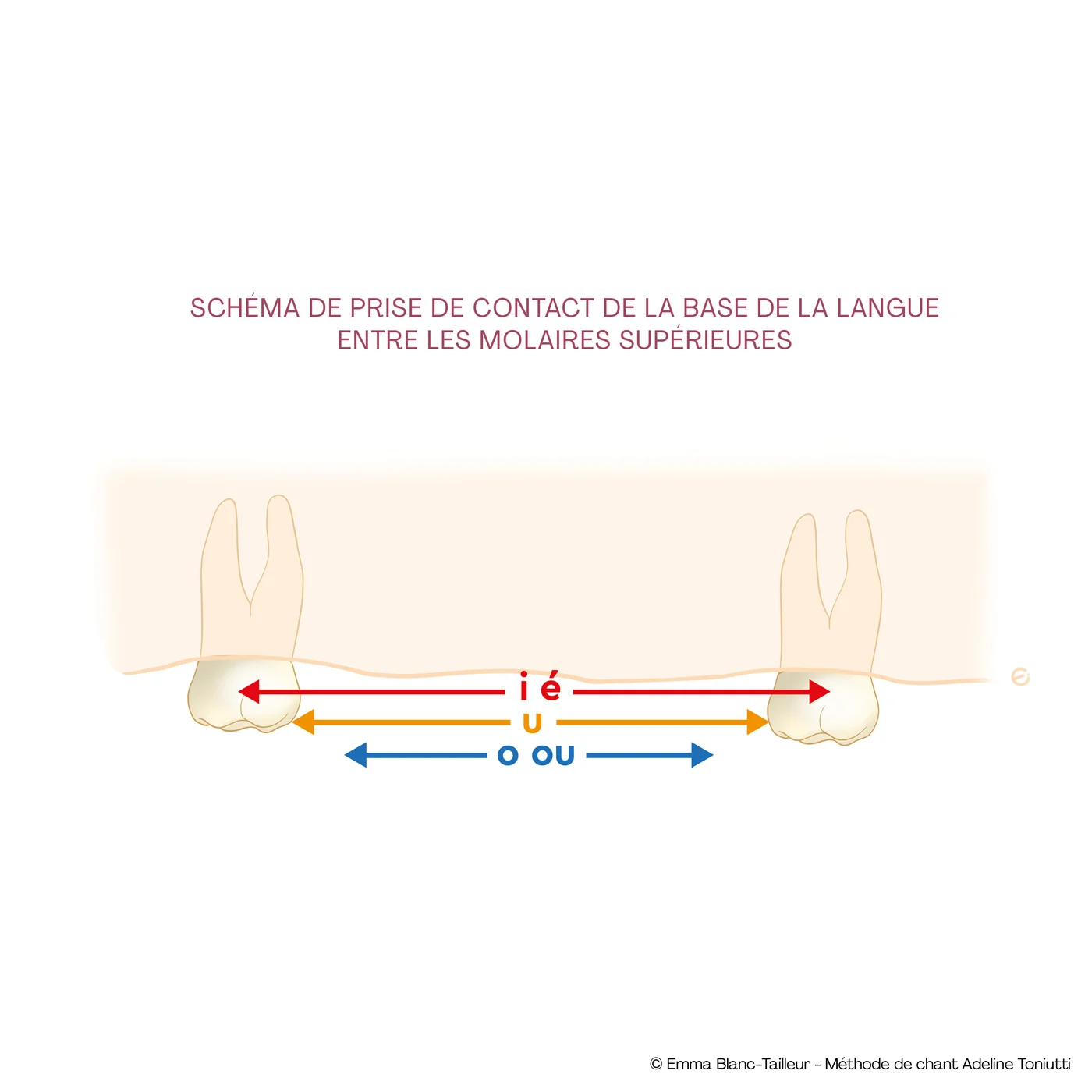
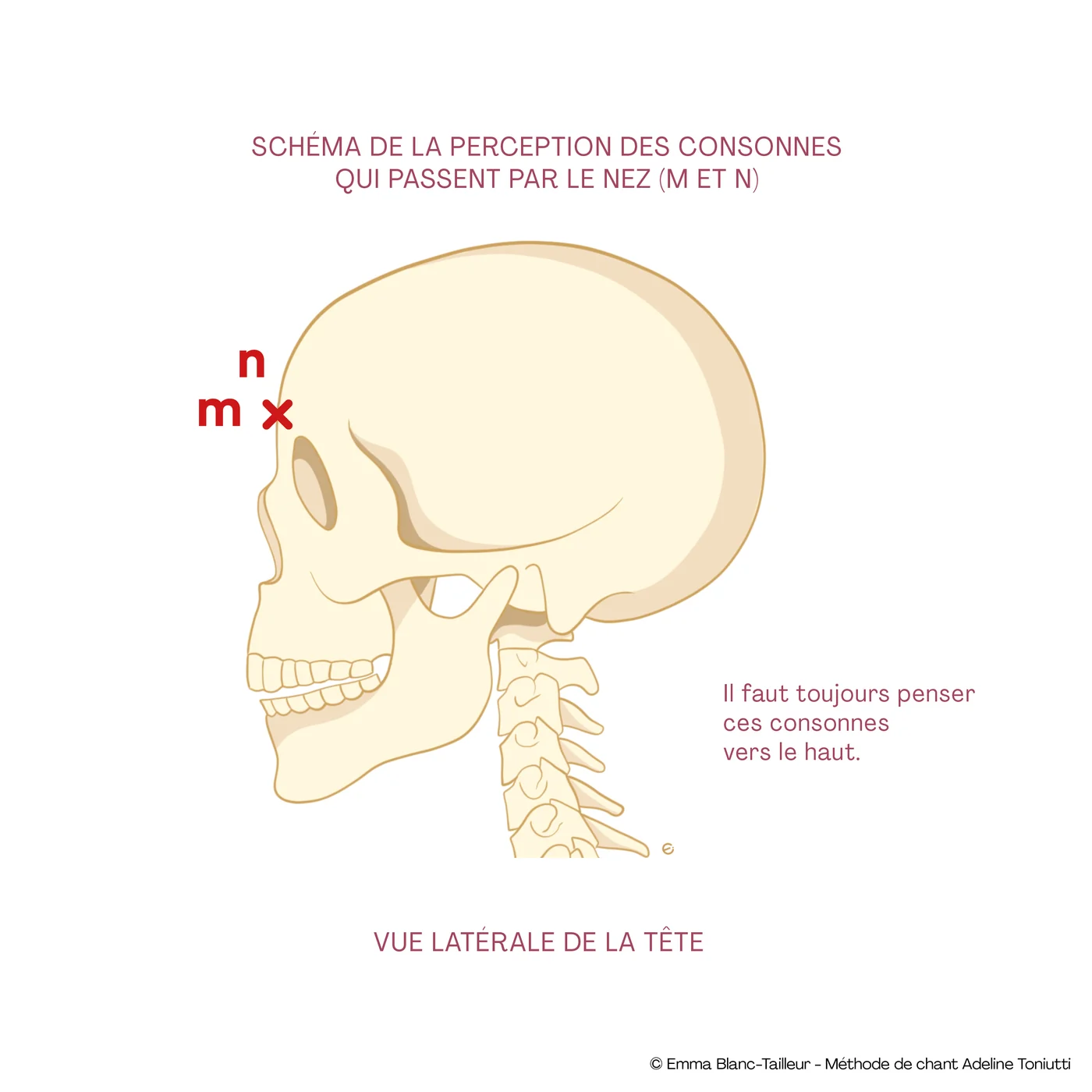
Illustrazioni © Emma Blanc-Tailleur, Anatomie du Chant, Adeline Toniutti
THE PALETTE
Non è un costume. È una scelta di colore
You do not change larynx to go from Piaf to Céline. You change what you ask of the vowels, the “r”, the silence, the vibrato, the link between syllables.
Finché il gesto è sano, si ha tutta la tavolozza. Quando la scelta si restringe, il gesto è meno ottimizzato, a volte pericoloso.
In the studio the question is therefore not “are you articulating enough?”. It is: which family are you in, today, for this song? The same artist can cross several. Chimène Badi shows it: Piaf plus soul. Céline can take the twang off. The professional is not stuck to one family.
A TIRED VOICE
Se la voce è stanca
Whispering is not advised. Adeline would rather have you speak with accents that favour a good placement, for an organic result with minimum effort: Québécois, Marseillais, or an actress like Chantal Ladesou. A technical virtue, and it loosens the room.
That meets the American-Québécois style without forcing it: the accent puts the voice where it carries, without squeezing.
IN PRACTICE
Nominare la famiglia prima della take
1. One family per phrase
Retro, American-Québécois, urban, French variety. One only for the phrase you are recording. You can change on the next verse. You do not mix everything in the same vowel.
2. Check the marks
Retro: rolled “r”, held silences, pure vowels, owned vibrato. American-Québécois: syllables cut like a diphthong, more nasal placement, twang you put on and take off, palate raised. Urban: rap links and grain, vowels that follow the emotion. French variety: pure vowels, discreet vibrato, close to the text.
3. If it will not flow in American-Québécois
English yaourt on the French song, then back to the text. You look for flow, not imitation.
4. The five pivot points stay the frame
Whatever the family: posture, free larynx, held exhale, cavities, articulation.
Pathology of the folds: see a specialist.
CALYP
Lavorare una famiglia al CALYP
Il metodo è in Anatomie du Chant (Marabout, 2024). Per lavorarlo con la squadra: prenota.
Domande frequenti
Quali sono i modi di cantare il francese secondo Anatomie du Chant?
Quattro famiglie: retrò (Piaf, Pravi, Zaho), americano-quebecchese o all’americana (Céline, Natasha St-Pier), urbano (Vitaa, Yseult, Angèle), french variety (Mylène Farmer, Françoise Hardy).
Cantare all’americana è il twang?
Sì, nel gergo di Adeline. Il twang si insegna a partire dai cinque punti cardine. Velo alzato.
Bisogna rollare le r per cantare in francese?
Solo nella famiglia retrò. In french variety le vocali sono pure e il vibrato discreto.
Si può cambiare famiglia da una canzone all’altra?
Sì. Un professionista non è incollato a una famiglia. Si nomina la famiglia prima della take.