طرق الغناء بالفرنسية
عيادة الصوت
ريترو، أمريكي-كيبكي، حضري، french variety. أربع عائلات للاستوديو.
IN THE STUDIO
لم نعد نعرف تماماً كيف نقولها
The language has changed. The codes for singing it have changed too. When an artist arrives in the studio, it is hard to guide them on what will suit their vocal style. It has not been formalised.
Adeline Toniutti takes this from a conversation with her manager. In Anatomie du Chant she groups these ways into four families. That is the point: not “articulate French”, but choose how you sing it.
The five pivot points remain the same instrument. The family is the colour you ask for.
RETRO
الأسلوب الريترو
تُدحرج الراءات، على طريقة إديث بياف. تُقطع الكلمات ليعيش الصمت. الحركات صافية. الاهتزاز مُتبنّى.
Barbara Pravi and Zaho de Sagazan have taken up some of these codes, the rolled “r” in particular. Chimène Badi covers Piaf with her soul style, and the vibrato stays owned. It is not “doing old”. It is a French that lets silence work, that does not swallow the vowels, that is not afraid of an “r” you can hear.
AMERICAN-STYLE
الأسلوب الأمريكي-الكيبكي
هذا ما تسمّيه أدلين أيضاً، في القاعة وعلى الشاشة، «الغناء على الطريقة الأمريكية».
Big-voiced singers take on anglophone ways. A more nasal placement. Syllables are cut like an American diphthong. Céline Dion, Natasha St-Pier.
التوانغ، من النقاط المحورية الخمس، تسمّيه «الغناء على الطريقة الأمريكية». سيلين ديون وديان دفرين تضعه في الفرنسية.
The palate stays raised. This is not nasalising to “do Céline”. Nasalising the sound, palate down, larynx dropping: that is the counterfeit of twang, and it puts the folds at risk. To find the flow of that French, Adeline sometimes has people sing a French song in English “yaourt”, onomatopoeia, until the line runs. At the Star Academy château, Claudia Tagbo’s yaourt with Michèle Laroque made the whole room laugh. The exercise is there to find that cutting of syllables.
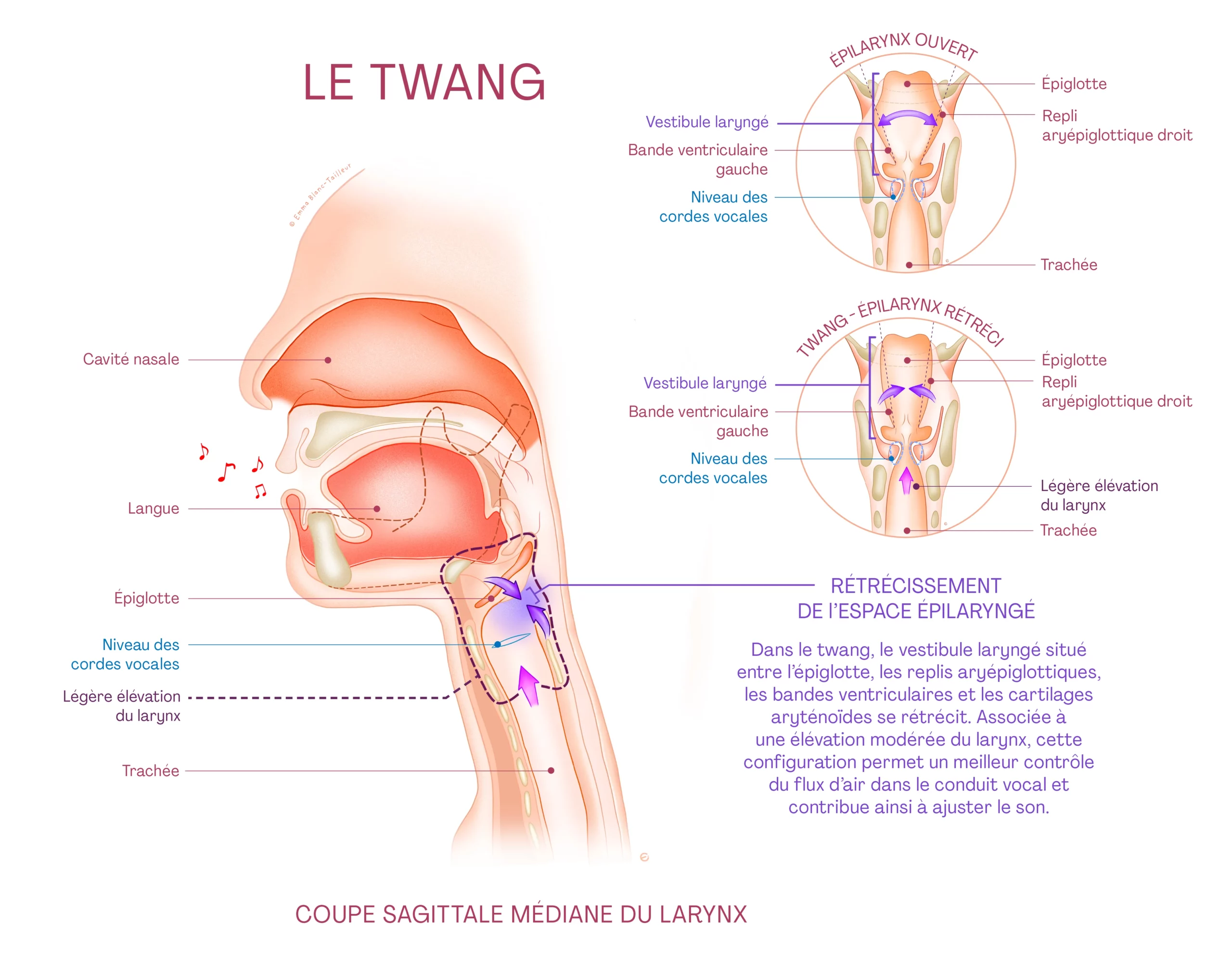
رسم © Emma Blanc-Tailleur، Anatomie du Chant، Adeline Toniutti
URBAN
الأسلوب الحضري
Some sounds, in the way of pronouncing or linking, come from rap or the urban.
Vitaa: an urban musicality, and a purity of timbre that is hers. Yseult, Angèle: they personalise the vowels according to the emotion. Here French is not “less sung”. It is linked differently. The vowels move with what you feel, not only with the written vowel.
FRENCH VARIETY
أسلوب french variety
حركات صافية. اهتزاز غائب أو خفيف. قريب من طبع النص. ميلان فارمر، فرانسواز هاردي.
No rolled “r” to make a period colour. No American diphthong. French stays near the spoken sentence, but it is still singing: the five pivot points hold the gesture, the vowel stays clean. The tongue between the molars, the nasals thought upward: the same pivot point 5, another dose.
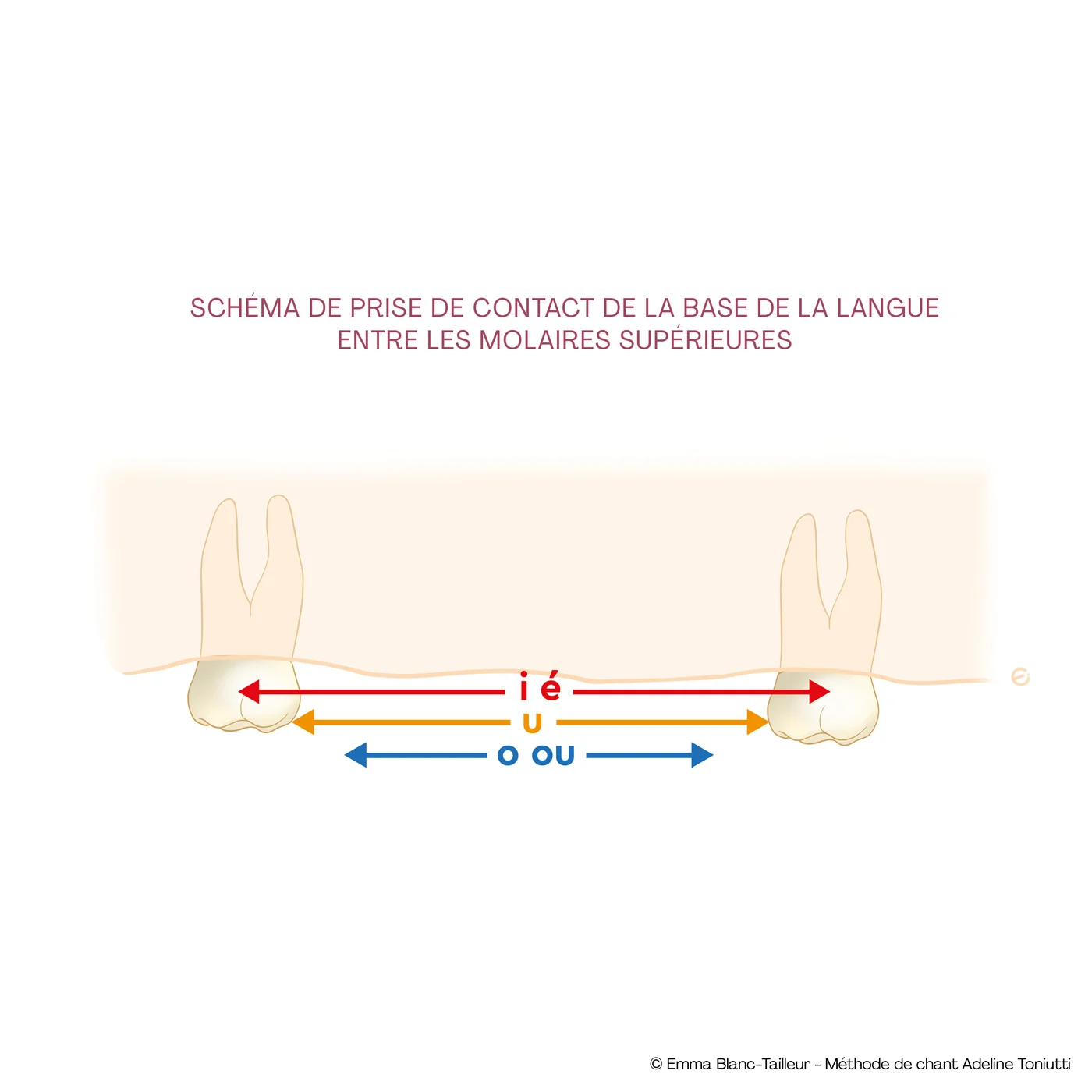
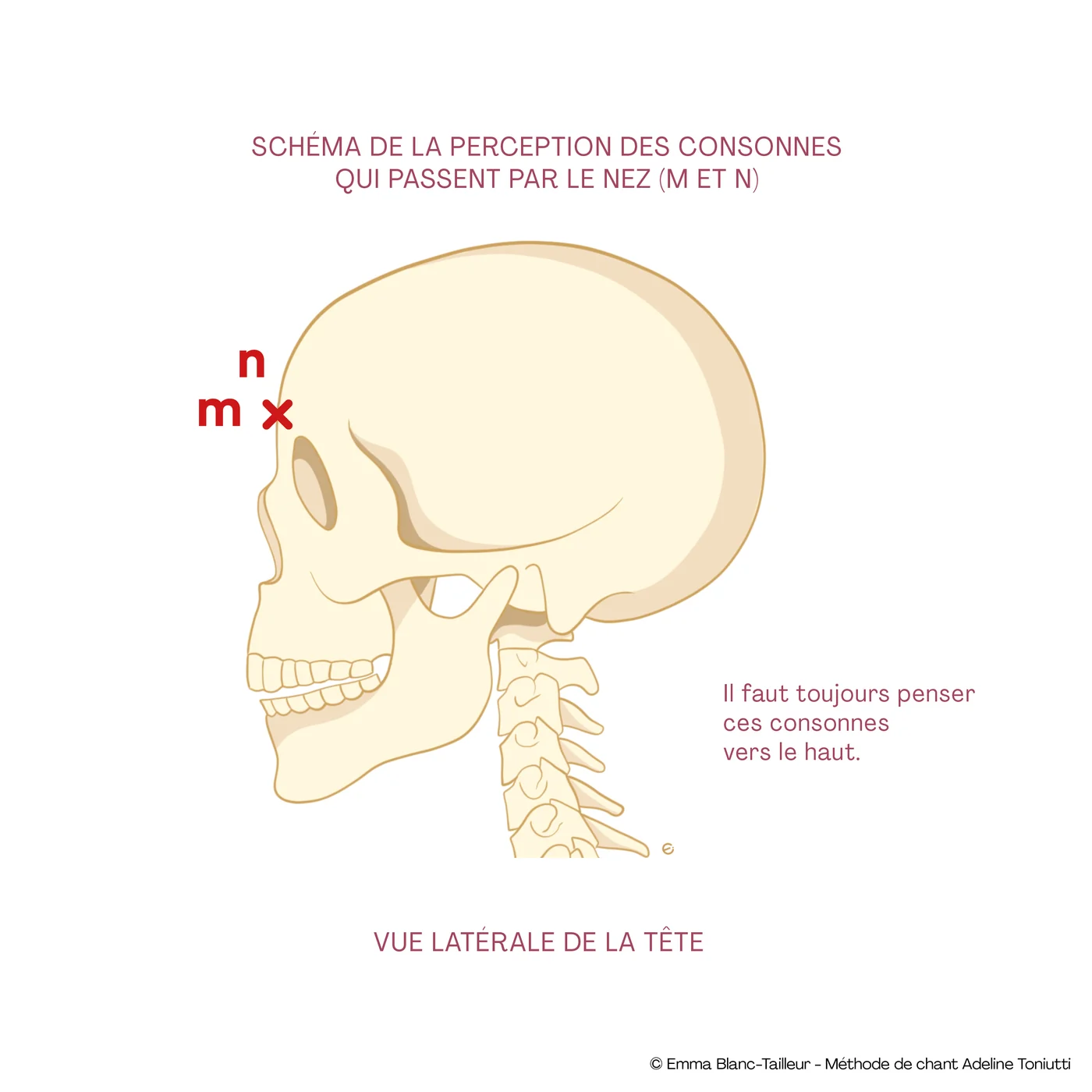
رسوم © Emma Blanc-Tailleur، Anatomie du Chant، Adeline Toniutti
THE PALETTE
ليست ثوباً. إنها اختيار لون
You do not change larynx to go from Piaf to Céline. You change what you ask of the vowels, the “r”, the silence, the vibrato, the link between syllables.
ما دامت الإيماءة سليمة، فاللوحة كلها متاحة. حين يضيق الاختيار، تكون الإيماءة أقلّ تحسيناً، وأحياناً خطرة.
In the studio the question is therefore not “are you articulating enough?”. It is: which family are you in, today, for this song? The same artist can cross several. Chimène Badi shows it: Piaf plus soul. Céline can take the twang off. The professional is not stuck to one family.
A TIRED VOICE
إذا تعب الصوت
Whispering is not advised. Adeline would rather have you speak with accents that favour a good placement, for an organic result with minimum effort: Québécois, Marseillais, or an actress like Chantal Ladesou. A technical virtue, and it loosens the room.
That meets the American-Québécois style without forcing it: the accent puts the voice where it carries, without squeezing.
IN PRACTICE
سمِّ العائلة قبل اللقطة
1. One family per phrase
Retro, American-Québécois, urban, French variety. One only for the phrase you are recording. You can change on the next verse. You do not mix everything in the same vowel.
2. Check the marks
Retro: rolled “r”, held silences, pure vowels, owned vibrato. American-Québécois: syllables cut like a diphthong, more nasal placement, twang you put on and take off, palate raised. Urban: rap links and grain, vowels that follow the emotion. French variety: pure vowels, discreet vibrato, close to the text.
3. If it will not flow in American-Québécois
English yaourt on the French song, then back to the text. You look for flow, not imitation.
4. The five pivot points stay the frame
Whatever the family: posture, free larynx, held exhale, cavities, articulation.
Pathology of the folds: see a specialist.
CALYP
اعمل عائلة في CALYP
المنهج في Anatomie du Chant (Marabout، 2024). للعمل عليه مع الفريق: احجز موعداً.
لمعرفة المزيد
تابع القراءة
الأسئلة الشائعة
ما طرق الغناء بالفرنسية في Anatomie du Chant؟
أربع عائلات: ريترو (بياف، برافي، زاهو)، أمريكي-كيبكي أو على الطريقة الأمريكية (سيلين، ناتاشا سان بيير)، حضري (فيتاء، إيسولت، أنجيل)، french variety (ميلان فارمر، فرانسواز هاردي).
هل الغناء على الطريقة الأمريكية هو التوانغ؟
نعم، في اصطلاح أدلين. التوانغ يُعلَّم من النقاط المحورية الخمس. الحنك مرتفع.
هل يجب دحرجة الراء للغناء بالفرنسية؟
فقط في عائلة الريترو. في french variety الحركات صافية والاهتزاز خفيف.
هل يمكن تغيير العائلة من أغنية إلى أخرى؟
نعم. المحترف غير ملتصق بعائلة واحدة. تُسمّى العائلة قبل اللقطة.