Discover Your Tessitura
VOICE CLINIC
Range, voice types, passaggio notes: understand your vocal identity to sing better, from opera to musical theatre.
Your tessitura, your identity
"You have no middle voice!" "A soprano with no high notes or a tenor with no high notes? No career!"
These phrases terrorise budding singers. We too often associate tessitura with what is lacking. Yet discovering your tessitura means discovering yourself and unlocking unsuspected vocal treasures.
Tessitura is not a restrictive label: it is a compass that guides singers towards their ideal repertoire — where their voice shines with the greatest ease and beauty.
The tessitura equation
The range (ambitus) is the full span of the voice, from the lowest to the highest note a singer can produce.
Tessitura is calculated using a more complex equation:
Most marketable part of the range
+ timbre colour
+ ability to vocalise
+ (for opera) vocal volume
= Tessitura
Tessitura names differ between men and women and vary according to the musical world — opera, musical theatre or contemporary singing.
On the path to your tessitura
Discovering your tessitura is a goal, not a prerequisite. Like a luthier building a violin, a singer builds their vocal instrument through technique. Do not feel guilty if you cannot find your tessitura straight away.
"Not knowing your tessitura does not prevent you from singing!"
— Adeline Toniutti, Anatomy of Singing
A poorly chosen tessitura can damage the voice. This is why the discovery process must be done patiently, guided by an experienced teacher.
Different expectations across musical worlds
Opera
Tessitura appears on an opera singer's CV and determines their repertoire. It is a fundamental selection criterion for roles and auditions.
Musical theatre
Additional criteria come into play: belting for women in chest voice, head voice for men. Vocal versatility is a major asset.
Pop / contemporary singing
Tessitura matters less than timbre signature. Vocal identity takes precedence over classification.
"Nothing can ever replace the joy of singing with a connected body and an organic gesture where you push your interpretive and emotional limits."
Range and tessitura — Operatic voices
| Operatic voice | Lowest note | Highest note | Low extension | High extension |
|---|---|---|---|---|
| Coloratura / light soprano | A3 | G6 | F3 | A6 |
| Lyric soprano | A3 | Eb6 | F3 | Eb6 |
| Dramatic soprano | A3 | C6 | F3 | D2 |
| Mezzo-soprano | F3 | B5 | D3 | C6 |
| Contralto | D3 | G5 | C3 | A5 |
| Light tenor | C3 | D5 | A2 | F5 |
| Tenor | B3 | C5 | A2 | D5 |
| Baritone | A2 | Bb4 | F#2 | A4 |
| Bass-baritone | E2 | G4 | C2 | A4 |
| Bass | C2 | F4 | C2 | F4 |
Source: after Miller (2007)
Musical theatre tessituras
Women — head voice
| Voice | Low note | High head-voice note | Estimated belt |
|---|---|---|---|
| Light / coloratura soprano | A3 | E6 | D5 |
| Soprano | A3 | C6 | D5 |
| Mezzo-soprano | F3 | B5 | C5 |
| Contralto | D3 | G5 | B4 |
Men — chest voice
| Voice | Low note | High chest-voice note | Estimated head voice |
|---|---|---|---|
| Tenor | B3 | C5 | F5 |
| Baritone | A2 | G4 | Bb4 |
| Bass | C2 | E4 | G#4 |
Source: after Rabah Aliouane
Passaggio notes
Passaggio notes are the transition zones between vocal registers. They vary according to voice category.
Women
| Category | Lower passaggio | Upper passaggio |
|---|---|---|
| Soprano | Eb4 | F#5 |
| Mezzo-soprano | E4 (F4) | E5 (F5) |
| Contralto | (G4) Ab4 | C5 |
Men
| Category | Lower passaggio | Upper passaggio |
|---|---|---|
| Light tenor | (Eb4) E4 | (Ab4) A4 |
| Lyric tenor | D4 | G4 |
| Spinto tenor | (C#4) D4 | (F#4) G4 |
| Dramatic tenor | C4 (C#4) | G4 |
| Lyric baritone | B3 | E4 |
| Dramatic baritone | Bb3 | Eb4 |
| Basso cantante | A3 | D4 |
| Basso profondo | (G3) Ab3 | (C4) Db4 |
Source: after Miller (2007)
Did you know?
The tuning fork — the reference frequency for tuning instruments — has been fixed at 440 Hz since 1953. But it varied considerably over the centuries: 392 Hz in France, 415 Hz in Germany.
In Mozart's time, the pitch standard was lower than today. This means the famous high F of the Queen of the Night (Die Zauberflöte) was actually lower than what sopranos sing today!
Anatomy of Singing
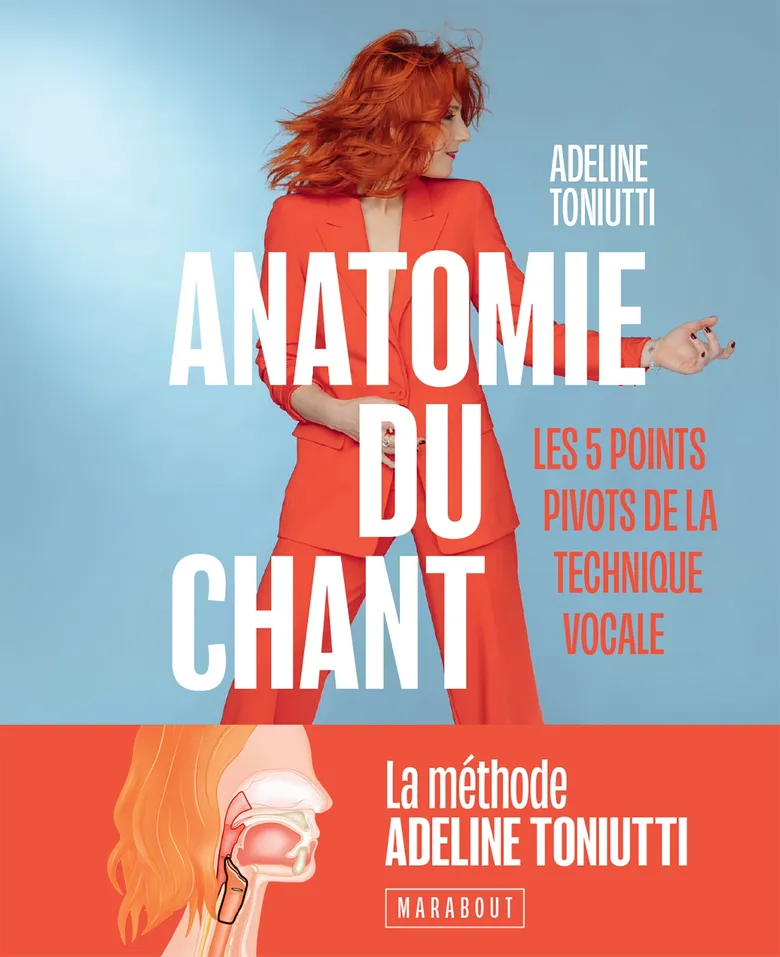
This article is drawn from Chapter 3 of Anatomy of Singing by Adeline Toniutti (Marabout editions). To deepen your understanding of tessitura, range and passaggio notes, discover the complete book.
Discover the book