
Dysphonia
VOICE CLINIC
Understanding voice disorders: causes, symptoms, diagnosis, and treatment. Expert medical care combined with vocal rehabilitation at CALYP.

DEFINITION
What Is Dysphonia?
Dysphonia is a voice disorder that can affect its intensity, pitch, and timbre. It can have several causes: inflammatory, traumatic, tumoral, or neurological.
Dysphonia presents several symptoms:
- Intensity alteration: The intensity of the voice is modified
- Pitch changes: Modified voice pitch (lower in women, higher in men)
- Timbre alteration: Hoarse, veiled, or rough voice quality
- Onset pattern: Appears suddenly or progressively with varying levels of discomfort
In professional singers or people who use their voice extensively, dysphonia often leads to a cessation of professional activity.
Special Note: Spasmodic Dysphonia
It typically appears between ages 45-50; causes remain unclear and it requires psychological intervention alongside medical treatment.
CAUSES
Causes of Dysphonia
Dysphonia can arise from inflammatory, tumoral, traumatic, or neurological causes.
1 Inflammatory Causes
- Acute laryngitis: infection or trauma-based, lasting days to weeks
- Chronic laryngitis: primarily tobacco-related; also from alcohol, vapor/dust irritation, vocal overuse, pharyngeal infections, or recurrent rhinosinusitis
- Specific laryngitis (rare): tuberculosis, syphilis, sarcoidosis, mycosis
2 Tumoral Causes
- Benign tumors: Glottic and supra-glottic tumors
- Malignant tumors: Vocal cord cancer, supra-glottic cancer, sub-glottic cancer
3 Traumatic Causes
- External laryngeal trauma (contusion, fracture, luxation)
- Internal laryngeal trauma (post-intubation granuloma, cricoarytenoid arthritis)
- Post-operative laryngeal surgery sequelae
4 Neurological Causes
- Laryngeal paralysis (nerve damage from thyroid, tracheal, or esophageal tumors, or post-operative injury)
- Diabetic neuropathies
- Guillain-Barre syndrome
- Multiple sclerosis
- Brainstem vascular accidents
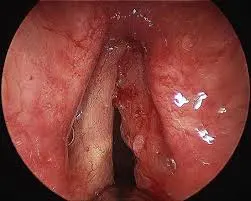
Vocal cord pathology -- tumoral causes
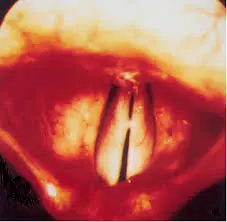
Laryngitis -- inflammatory cause of dysphonia
CONSEQUENCES
Impact on Daily Life
Generally, when a person presents dysphonia, they will experience difficulties speaking or expressing themselves in spoken or singing voice.
Outcomes depend on individual cases; ENT surgeons may recommend surgical or rehabilitative solutions.

URGENT
For Singers Experiencing Dysphonia Symptoms
Seeking immediate medical care is the top priority to prevent the situation from worsening.
It is strongly inadvisable to continue vocal activity without medical advice.
Some phoniatrists accept emergency consultations; others do not. Professional voice users should schedule regular specialist visits.
RELATED CONDITIONS
Nodules, Polyps, Edema and Dysphonia
Recognizing the symptoms of vocal cord lesions is essential for early treatment.
Symptoms of Vocal Cord Lesions
- Reduced vocal range (ambitus)
- Decreased volume
- Difficulty producing vibrato while speaking or singing
- Different timbre than before
- No return to normal after vocal rest
Singers often discover pathology only after it is established.

Teacher and Coach Responsibility
Coaches must verify that the technique taught aligns with phonatory apparatus function. "We have observed that very often the singer finds themselves abandoned by their entourage at the time of diagnosis."
PREVENTION
Poor Vocal Habits and Vocal Cord Lesions
Teacher responsibility includes warning students that "their vocal habits can -- if they are inadequate or even dangerous -- lead to a complete cessation of vocal practice and require surgical intervention."
CHECK-UP
Vocal Assessment (Vocal Check-up)
Regular specialist check-ups are essential for preventing vocal cord disease. Nodules and polyps do not end careers -- they are treatable via rehabilitation and/or surgery. The post-operative phase is critical: avoiding the forced vocal gestures that caused the original pathology.
Recommended surgeons: Dr. Perouse, Dr. Coulombeau, Dr. Malitchenko, Dr. Jacobs -- who prescribe pre-operative vocal rehabilitation to prepare patients for corrected vocal technique.
REHABILITATION
Vocal Rehabilitation: From Spoken to Singing Voice
Speech therapists address spoken voice issues, but singing technique problems require specialized coaching. A combined approach is recommended: speech therapist (spoken voice) + vocal coach (singing technique correction).
Post-operative psychological trauma can prevent singers from returning to performance confidently.
MULTIDISCIPLINARY APPROACH
CALYP's Team Approach
A comprehensive team of specialists addressing vocal pathology from every angle.
Medical Team
- Dr. Romain Perouse (ENT surgeon)
- Dr. Albert Jacobs (ENT/cervicofacial surgeon)
- Dr. Bruno Coulombeau (Phoniatrist)
- Dr. Natalie Malitchenko (Phoniatrist)
- Dr. Jean Charmoille (Psychiatrist/psychoanalyst)
- Maryse Beaupied (Osteopath/etiopath)
Leadership
Adeline Toniutti (vocal coach, phonatory physiology expert, interpretation specialist, director) brings together the entire team, ensuring an integrated approach combining surgical expertise with vocal technique rehabilitation.
DOCUMENTARY
Operation Opera
A 2017 film shot at Clinique des Portes du Sud (Venissieux), directed by Dr. Perouse's team. It addresses complex pathologies: open cysts, sulcus with mucosal bridges. Full operating room immersion. The film is in the festival circuit.

TECHNIQUE
Vocal Technique Diversity
From Belting to Lyric Voice
Adeline Toniutti emphasizes safe learning across multiple techniques. Why create barriers between vocal styles? Why deny singers the experience of jazz while maintaining lyric aesthetics?
The US industry permits more permeability; France maintains strict specialization boundaries, limiting artists' musical breadth.
Examples of cross-genre exploration: Luciano Pavarotti (opera + variety artists), Celine Dion (opera fragments), Natalie Dessay (opera + Michel Legrand), Lady Gaga (vibrato variation + belting).
BEYOND SINGING
The Vocal Coach's Expanding Role
Beyond singers: corporate executives increasingly employ vocal coaches for oral presentation improvement. Mastering voice develops leadership through breath control, tone adjustment, and physical posture.
Adeline Toniutti offers role-playing exercises addressing problematic communication situations, combined with psychological work and sung sound exploration.